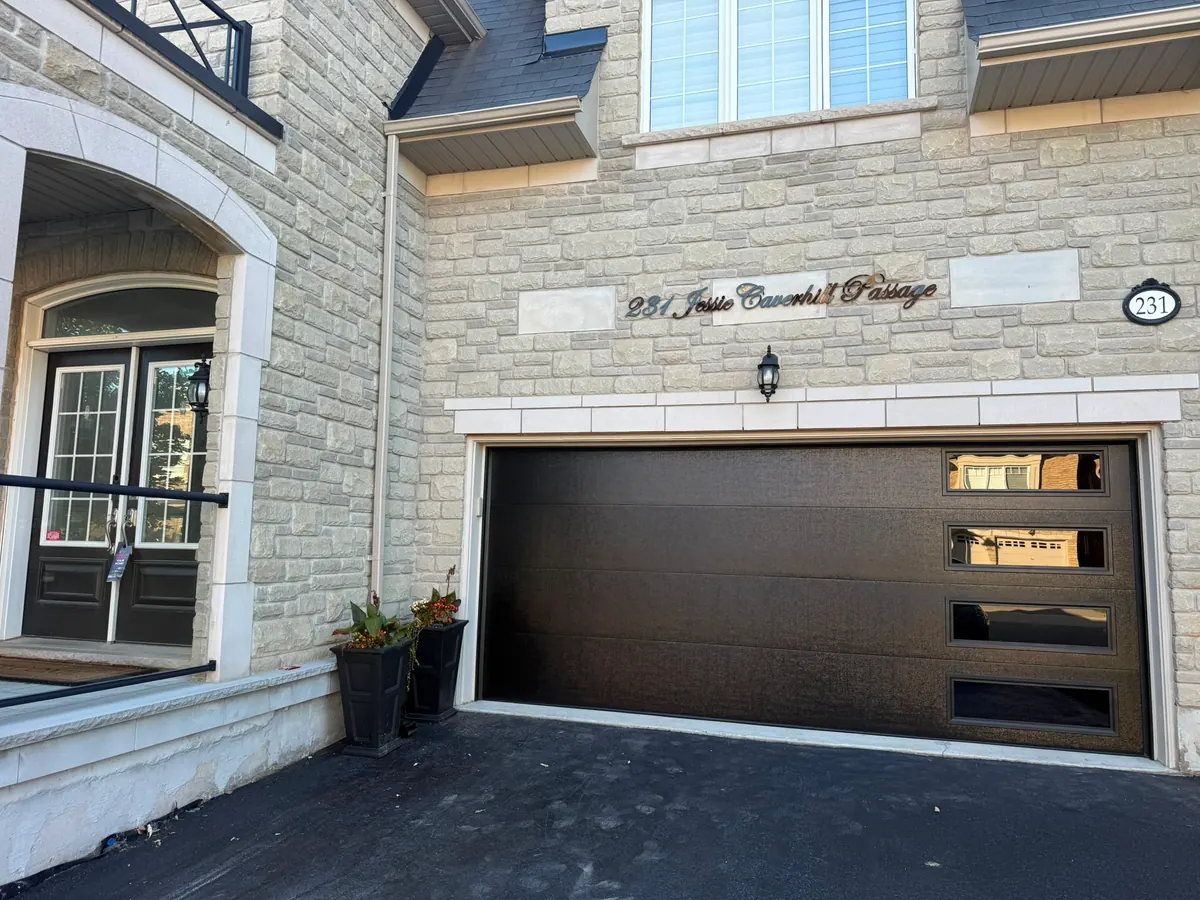
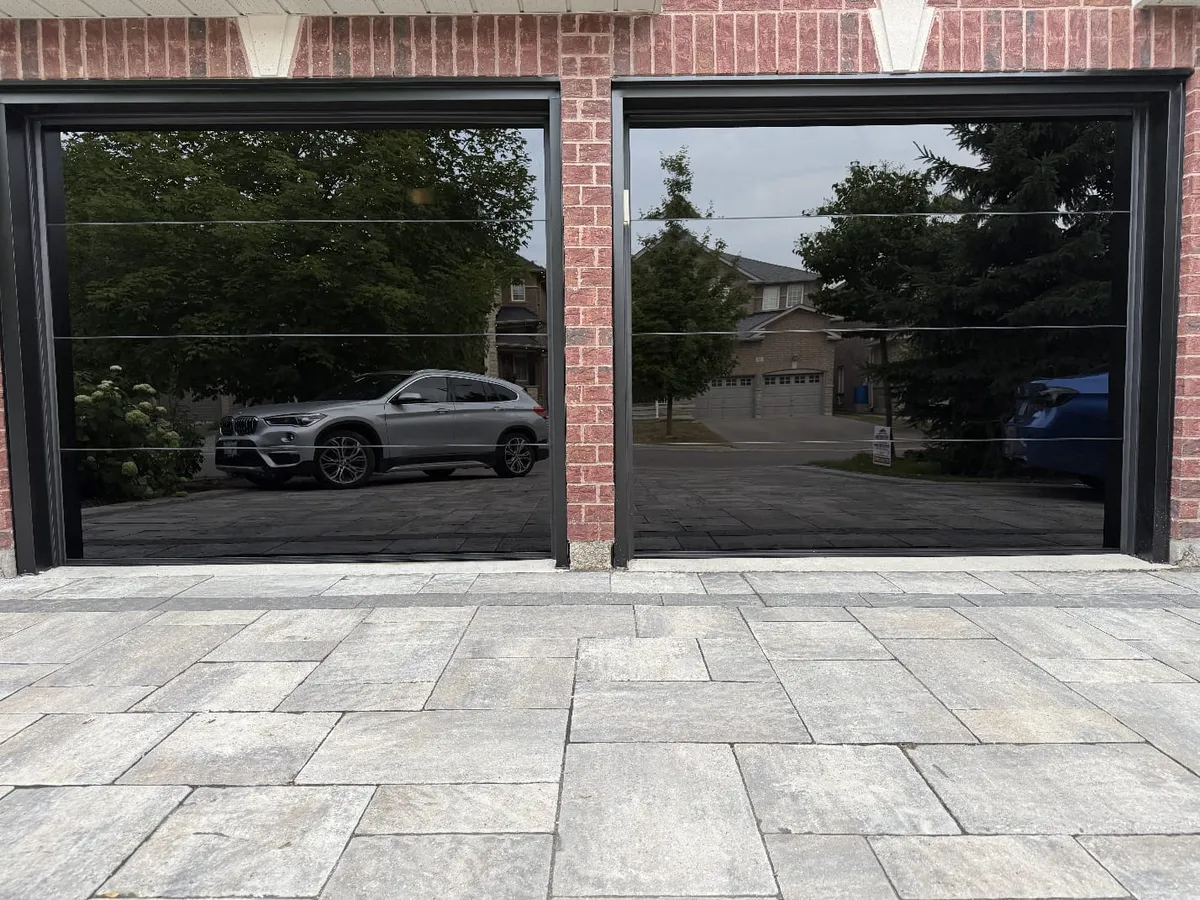
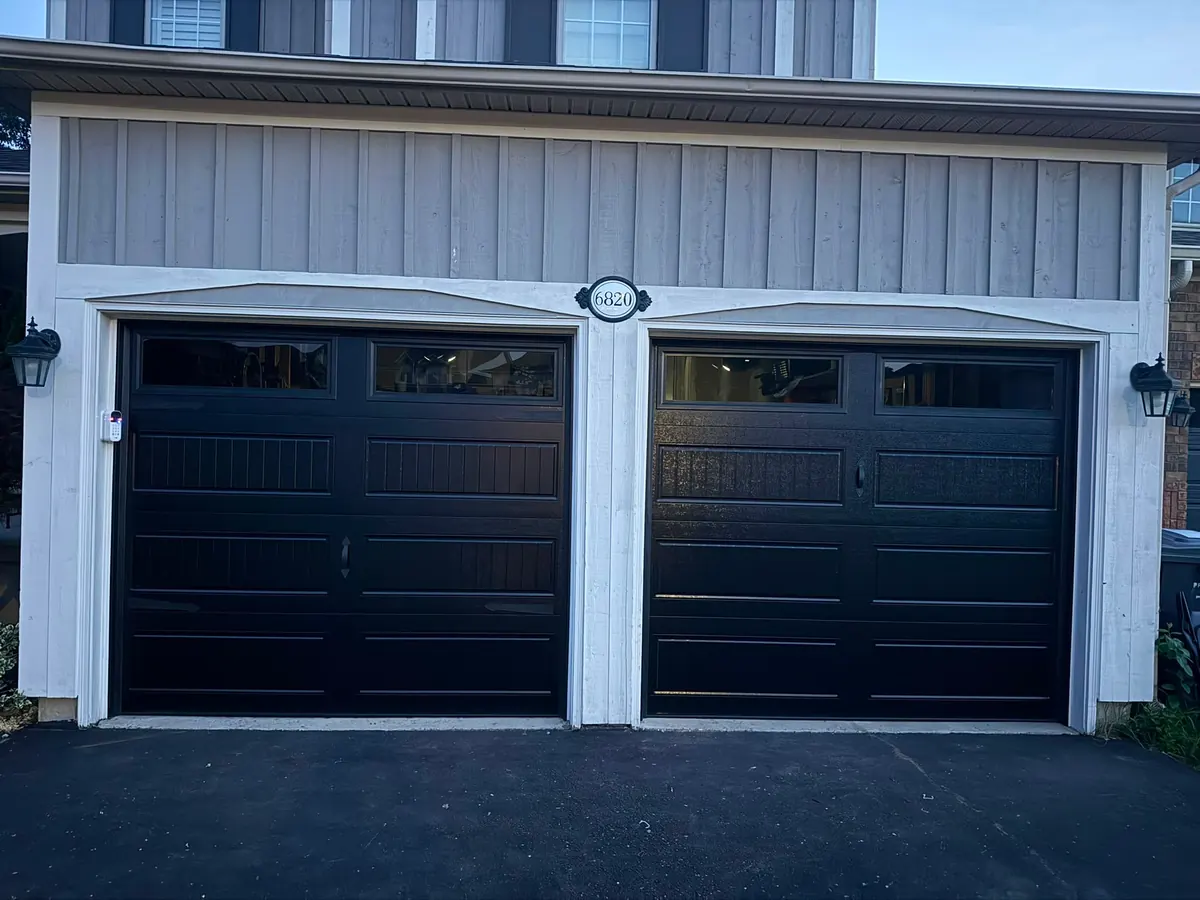
Choosing Garage Door Hardware Finishes

Royal Garage Doors has customer feedback on its Etobicoke Google profile and technicians with hands-on experience installing and repairing doors across Toronto and the wider GTA.
What hardware finish should you choose for a Carriage-style garage door?
Choosing a garage door hardware finish means picking the strap hinges, handles, and clavos on a Carriage or Carriage Overlay panel — a choice made independently of panel colour.
Does the hardware finish cost extra on top of the door price?
On a standard Carriage door, decorative hardware is part of a package priced the same as Long Panel, Short Panel, and Flush styles — from $1,350 installed for an 8x7
- Customer feedback
- Read our Google reviews (Etobicoke profile)
- Experience
- Garage door service across the GTA
- Repair warranty
- 1-year parts and labour unless a specific written warranty overrides it
- Author
- Royal Garage Doors, Garage door repair and installation
What "hardware" means on a Carriage-style door
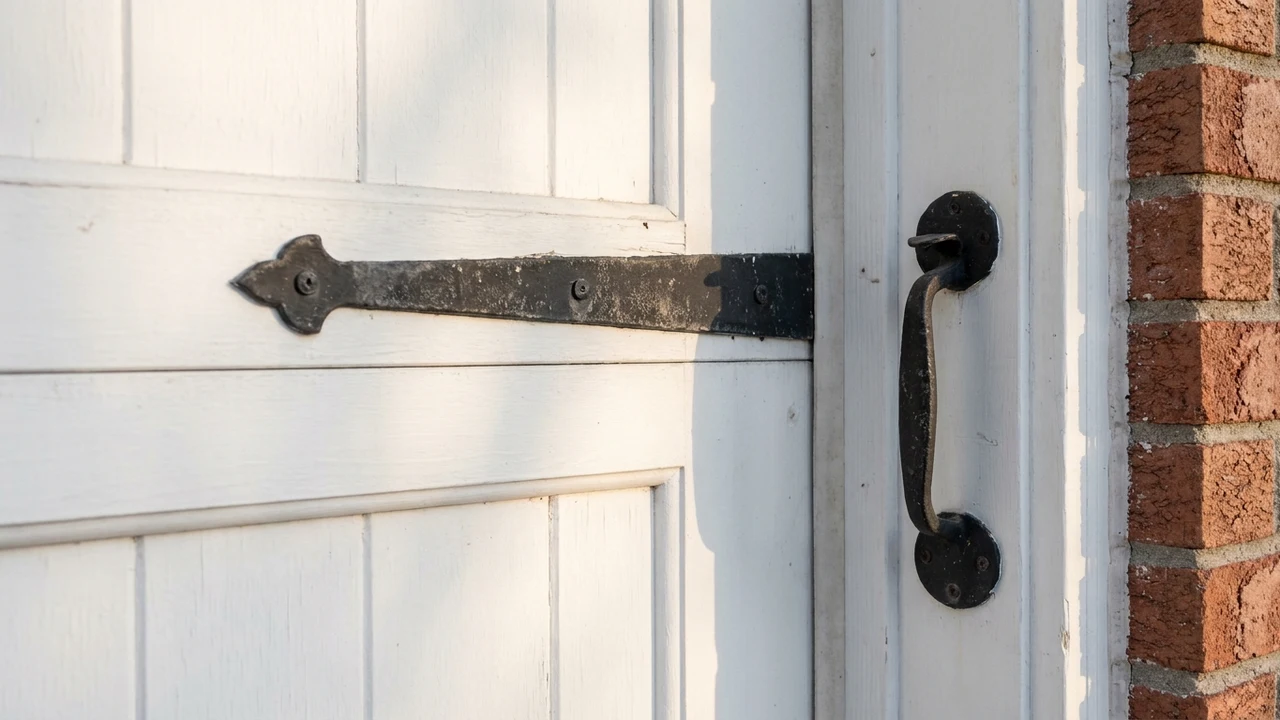
On a Carriage or Carriage Overlay door, "hardware" doesn't mean anything mechanical — it means the decorative metal applied to the face of the panel. Three pieces do almost all the visual work:
- Hinge straps: the long, tapered bands that run across each section, styled after the hinges a real swinging barn door would use.
- Handles: mounted at panel height, purely decorative — the door still opens on the same torsion-spring and roller system as any sectional door.
- Clavos: the round or diamond-shaped studs spaced along the strap, styled after the nail heads used to fasten hardware to real timber.
None of it swings, latches, or bears load. It's bolted to a steel or fibreglass panel to make a sectional door read as a carriage house door from the driveway.
Carriage vs. Carriage Overlay changes how much hardware you actually see
This is the detail that trips people up when they're comparing photos online. A standard Carriage door has the barn-door look stamped or embossed into a flat panel — the grooves are shallow, and any hardware sits close to the surface. Carriage Overlay bolts raised, applied panel sections onto the door face, so the hinge straps and handles sit on top of real dimension and cast their own shadow line.
Put the same matte black hardware on both, and it reads noticeably bolder on the Overlay door. If you've seen a "carriage" door online that looked flat and printed-on next to one that looked genuinely built from timber sections, that's usually the Overlay difference — not a different hardware finish.
The finish options you'll be choosing between
Hardware finish is a separate decision from the finish on the door panel itself, and it's worth treating it that way at the design stage rather than an afterthought once the door is ordered. The finishes typically offered fall into a few families:
| Finish | What it looks like | Best paired with |
|---|---|---|
| Matte / flat black | Solid, no-shine black — the most requested finish by a wide margin | White, sandstone, almond, or light woodgrain panels |
| Oil-rubbed bronze look | Dark bronze base with lighter brushed highlights on raised edges | Dark brown, brown, or woodgrain oak/walnut panels |
| Pewter / graphite | Cooler, flatter gray-black with less contrast than bronze | Charcoal, dark gray, or black panels |
Exact finish availability depends on the hardware line stocked for your door series, so confirm the options with your estimator before you commit to a panel colour — it's easier to match the two together up front than to discover after ordering that your preferred hardware finish isn't offered with your preferred panel.
How the same door looks different with different hardware
This is the part homeowners underestimate: two identical white 16×7 Carriage doors, same panel, same window pattern, can look like they came from two different manufacturers depending on the hardware finish.
- White panel + matte black hardware: crisp, high-contrast, farmhouse-modern — the look most requested on newer GTA builds.
- White panel + oil-rubbed bronze hardware: softer, more traditional, reads closer to a heritage carriage house.
- Dark brown or woodgrain panel + black hardware: hardware nearly disappears into the panel, letting the panel grain do the work.
- Charcoal or dark gray panel + pewter hardware: low-contrast, understated — hardware present but not the focal point.
If you're not sure which direction to go, start from the panel colour you've already decided on, then pick the hardware finish that gives you either strong contrast (visible, deliberate hardware) or low contrast (hardware present but quiet). There's no wrong answer — it's a statement about how much attention you want the hardware itself to draw.
Matching hardware to what's already on your house
The fastest way to get this right is to walk your own exterior before you order anything. Look at the hinges and handle on your front door, your house numbers, your mailbox, and your exterior light fixtures. Most GTA homes built or renovated in the last decade already carry black hardware somewhere on the front elevation — which is a large part of why matte black is the most requested garage door hardware finish. Matching it ties the whole front of the house together instead of introducing a fourth metal finish that competes with the other three.
If your existing exterior hardware runs warmer — oil-rubbed bronze on the front door, brass house numbers — a bronze-look garage door hardware package will read as intentional rather than mismatched. Bring photos (or the actual hardware model, if you have it) to your consultation so the estimator can steer you toward the closest match Royal Garage Doors can supply.
What a hardware package changes about price and ordering
A standard Carriage door — the version with the barn-door look stamped into a flat panel — is priced the same as Long Panel, Short Panel, and Flush styles: from $1,350 installed for an 8×7 single up to $2,300 for a 16×7 double, before adding window inserts at $125 per window or the +$300 woodgrain finish. Carriage Overlay, because it uses raised applied panels rather than a stamped flat face, is quoted individually once your hardware package, panel depth, and any glass or window inserts are factored in.
One practical point: hardware is bolted to the panel during manufacturing, not added on site after the door is hung. Whatever finish you choose has to be part of the original order, so decide on it before the door is built, not after.
Keeping the finish looking new
Decorative garage door hardware is finished the same way most quality exterior hardware is — a baked-on coating over the base metal, not paint that will chip with a stray car door or a snow shovel. It doesn't need polishing or oiling. An occasional rinse with the hose when you're washing the panel is enough to keep grit from building up around the clavos and hinge strap edges. Every new door Royal Garage Doors installs carries a 1-year labour warranty, a 5-year hardware warranty, and a lifetime panel warranty against rust-through perforation, so the hardware finish is covered under the same terms as the rest of the door.
Royal Garage Doors recommendation
Decide on your hardware finish before you order, not after — it's bolted to the panel at manufacturing and can't be swapped later the way a panel colour sometimes can. Bring a photo of your front door hardware to the consultation and let the estimator match or intentionally contrast it against your chosen panel colour. Standard Carriage pricing starts at $1,350 installed for an 8×7 single; see the full pricing page for every size and finish, or book a consultation to see hardware samples against your actual panel colour before you commit.
Related reading: Garage Door Styles Guide: Which One Is Right for Your Home and Garage Door Colour Guide: Choosing the Right Finish for Your GTA Home.
Frequently Asked Questions
Does the hardware finish cost extra on top of the door price?
On a standard Carriage door, decorative hardware is part of a package priced the same as Long Panel, Short Panel, and Flush styles — from $1,350 installed for an 8x7 single up to $2,300 for a 16x7 double. Carriage Overlay, which uses raised applied panels, is quoted individually once your hardware package and any window inserts ($125 each) are factored in.
What's the real difference between Carriage and Carriage Overlay hardware?
Standard Carriage doors have the barn-door look stamped into a flat panel, so hardware sits close to the surface. Carriage Overlay bolts raised sections onto the face, giving hinge straps and handles real depth and shadow line — the same finish reads bolder on an Overlay door than on a standard Carriage panel.
Can I pair a light panel colour with dark hardware?
Yes — it's the most common combination requested. A white, sandstone, or almond panel with matte black hardware is one of the most popular looks on GTA installs, largely because it matches the black hardware most homeowners already have on their front door and house numbers.
Does the decorative hardware rust or fade over time?
No. The decorative hardware on a Royal Garage Doors install is covered under the same 5-year hardware warranty as the rest of the door's hardware, plus the lifetime panel warranty against rust-through perforation.
Can I add or change the hardware finish after the door is installed?
No — the hardware is bolted to the panel during manufacturing, not added on site afterward. It has to be part of your original order, so decide on the finish before the door is built and bring reference photos of your existing exterior hardware to your consultation.
Sources & standards: Garage door safety follows the UL 325 standard for automatic operators. For safe manual operation, see Chamberlain's emergency-release guidance. Pricing reflects current Royal Garage Doors rates for the GTA.
The bottom line: done right, the result is a garage door that opens quietly, balances correctly and is safe to use every day — backed by Royal's 1-year labour warranty so the outcome lasts.