Garage Door Checklist After a Big GTA Storm

Royal Garage Doors has customer feedback on its Etobicoke Google profile and technicians with hands-on experience installing and repairing doors across Toronto and the wider GTA.
What should you check on your garage door after a big storm?
After a big GTA storm, walk through five checks before trusting your garage door again: track alignment, panel dents, sensor alignment, opener response, and spring/cable tension. Royal Garage Doors treats storm follow-up like any diagnostic call — the visit is free with any repair, so a full inspection costs nothing if something needs fixing.
How soon after a storm should I check my garage door?
Same day, before you run it again if possible. A visual walk-around of the track and panels takes two minutes and can catch a problem — a bent track or
- Customer feedback
- Read our Google reviews (Etobicoke profile)
- Experience
- Garage door service across the GTA
- Repair warranty
- 1-year parts and labour unless a specific written warranty overrides it
- Author
- Royal Garage Doors, Garage door repair and installation
Walk the door before you run it
After a high-wind warning, a hailstorm, or one of the microbursts that roll through Mississauga, Brampton, and Vaughan most summers, don't hit the opener button as soon as the sky clears. A garage door that took wind pressure, flying debris, or a power interruption can have a problem that only shows up once it's moving — a bent track that shears a roller, or a panel that's already cracked and just needs one more cycle to let go. Do a visual walk-around first, door closed, before you touch the remote.
Check the track for storm-shifted alignment
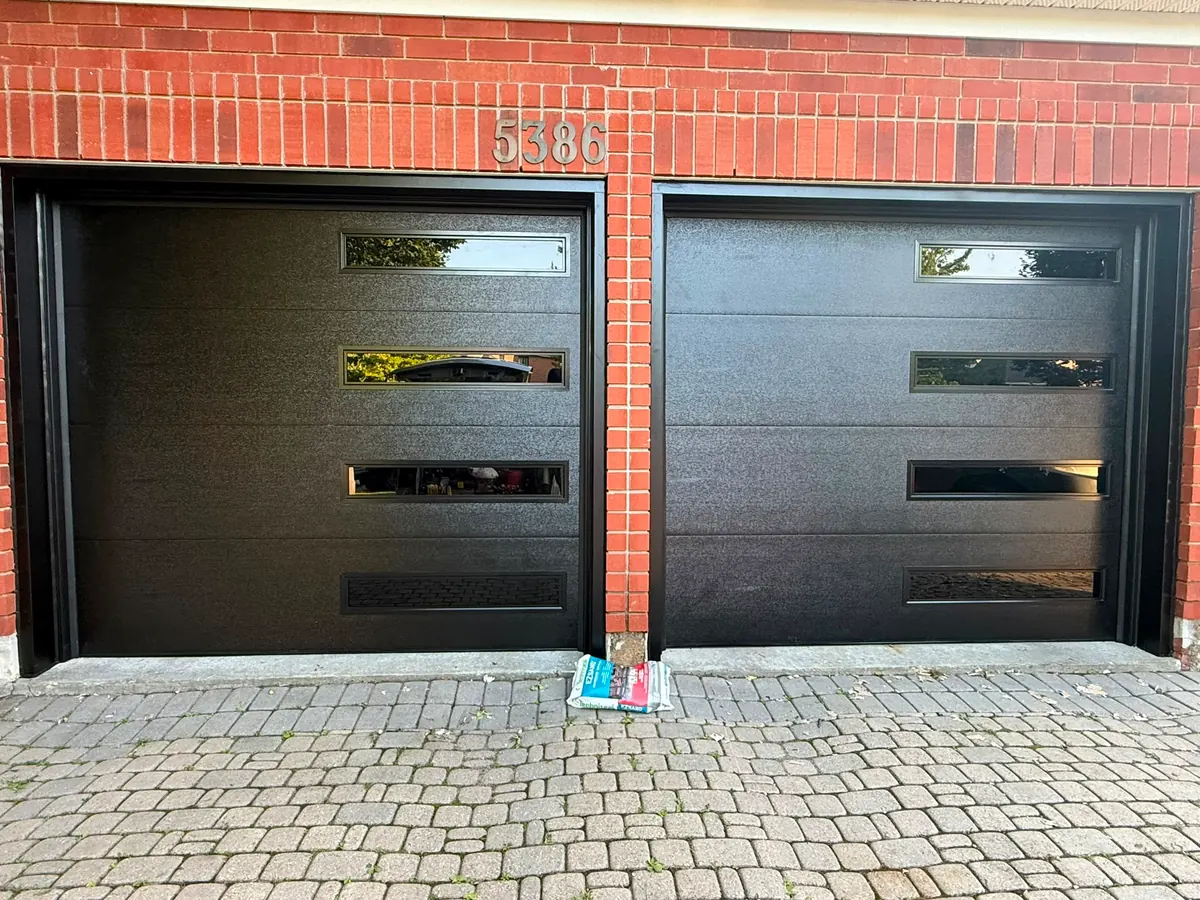
Wind load flexes a garage door more than people expect, especially on a 16x7 double door with a lot of surface area. Stand at each side and sight down the vertical track from top to bottom:
- Gaps between the rollers and the track mean the track has pulled away from the wall — usually loose lag screws, sometimes a bent bracket.
- A track that bows outward partway up is a sign the door was pushed against it under pressure. Don't cycle the door on a visibly bent track — that's how a roller jumps the rail.
- Debris wedged in the track — leaves, small branches, roofing grit — needs to come out before the door runs, or it'll get pulled into the rollers.
If the track looks straight and clear, that's a good sign. Track repair or realignment runs $180-$350 + tax; a full off-track repair, if a roller has already jumped the rail, is $180-$450 + tax.
Inspect every panel for dents, cracks, and lifted seams
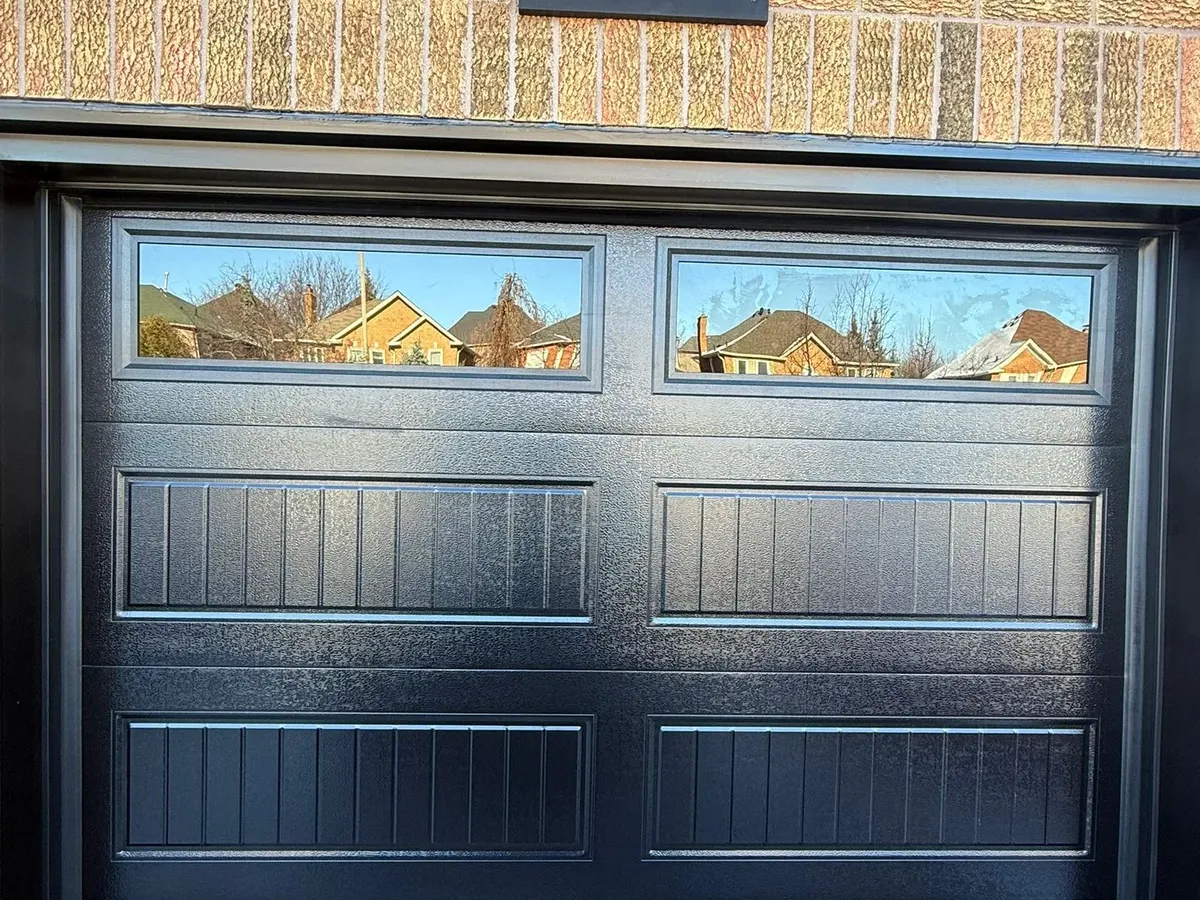
Hail and wind-blown debris hit steel and wood-composite doors differently. On a steel door, look for shallow dents that catch the light at an angle — they're often more visible from a few feet back than up close. On wood-look composite or wood doors, check for cracked seams where panels join, especially near the bottom section where wind pressure concentrates.
A few small dents from hail are usually cosmetic and not urgent. A cracked panel, a section that's visibly bowed, or a door that no longer sits flush against the weatherstripping when closed is a structural issue worth pricing out. Panel replacement runs $500-$1,000 + tax depending on the section and finish — usually far less than replacing the whole door.
Re-test both safety sensors
This is the step most homeowners skip, and it's the one that causes the most callbacks. The two photo-eye sensors near the floor on each side of the track don't need to be hit by anything to stop working after a storm — wind vibration alone can loosen a mounting bracket enough to knock the beam out of alignment, or blow a leaf or twig directly into the sensor's line of sight and leave it there.
Check both LEDs. Solid and steady on both sides means they're aligned and seeing each other. A blinking LED on either unit means realign it — same height on both sides, typically 4-6 inches off the floor, lenses wiped clean and pointed straight across at each other. If the door still won't close, or reverses partway down, after you've confirmed clean, aligned sensors, that's a wiring or bracket problem, not something to force past by holding the wall button down.
If the power flickered, don't assume the opener is fine
A brief outage or a surge during a storm can reset an opener's logic board without any visible damage. The symptoms are easy to mistake for a dead motor: the door doesn't respond to the remote, the wall button does nothing, or the opener runs but the travel limits are off and it stops short or reverses immediately.
Before assuming the worst, unplug the opener for 30 seconds, plug it back in, and reprogram your remotes and keypad from scratch — a surge-triggered reset often just wipes that memory. If the motor hums but the door doesn't move, or nothing happens at all, that's more likely a fried logic board or capacitor, and it's worth a diagnostic rather than repeated attempts. Opener repair runs $120-$550 + tax depending on what's actually failed — a remote reprogram is the cheap end of that range, a logic board replacement the expensive end.
Springs and cables carry more strain after a storm
Torsion springs and lift cables rarely fail directly from wind, but a storm that's loosened a bracket or knocked the door slightly out of balance puts extra strain on them every time the door cycles afterward. If the door feels heavier than usual when you lift it manually, or it doesn't stay put halfway open, that's an early sign of a balance problem, not a spring that's about to snap on the spot — but it's worth catching now.
| What you notice | Likely cause | Typical cost |
|---|---|---|
| Door heavier or unbalanced after the storm | Loosened bracket, shifted cable | $180-$260 + tax |
| Blinking sensor LED, door won't close | Debris or vibration knocked alignment off | Often free — realign yourself first |
| Opener dead or acting erratic since the outage | Surge reset or damaged board | $120-$550 + tax |
| Visible dents or a cracked panel | Hail or wind-blown debris impact | $500-$1,000 + tax |
When it's a call, not a DIY fix
Cleaning a sensor lens or clearing debris out of the track is safe to handle yourself. Anything involving the torsion spring, the cables, or a door that's come off its track is not — those parts are under enough tension to cause a serious injury, and it's the same reason we don't recommend homeowners adjust spring tension even on a normal day. If the door won't move at all, is visibly off-track, or you hear a loud bang from the garage during the storm itself, leave the door down, don't force the opener, and get it looked at.
Royal Garage Doors recommendation
Storm damage is rarely one obvious thing — it's usually a combination of a slightly bent track, a knocked-out sensor, and an opener that reset itself, and homeowners often fix one and assume the door is back to normal. Our technicians check all of it in one visit: track alignment, panel condition, sensor calibration, opener response, and spring balance. With experience serving the GTA and customer feedback on our Etobicoke Google profile, we've seen what a Toronto-area summer storm does to a garage door more times than we can count. The service call is free with any repair, so there's no cost to finding out what actually needs attention. Book a post-storm inspection or check current rates on our pricing page before you call.
Related reading: Protecting Your Garage Door Opener From Summer Storm Power Surges and Garage Door Track Repair: Bent & Off-Track Fix.
Frequently Asked Questions
How soon after a storm should I check my garage door?
Same day, before you run it again if possible. A visual walk-around of the track and panels takes two minutes and can catch a problem — a bent track or a cracked panel — that gets worse if you cycle the door on it.
Can wind actually bend a garage door track?
Yes. Sustained wind pressure on a large door, especially a 16x7 double, can flex the panels enough to push against the track and bow it or pull the brackets loose from the wall. Sight down each side track before running the door; a visible bow means it needs realignment first.
My garage door worked right after the storm but stopped closing the next day — why?
This is almost always the safety sensors. Wind vibration can gradually loosen a sensor bracket, or a leaf or piece of debris can settle directly in the beam's path hours later. Clean both lenses and confirm the LEDs are solid and steady on both sides before assuming it's a bigger problem.
Does a power surge during a storm damage a garage door opener?
It can, but often the damage is just a memory reset rather than a burned-out part. Unplug the opener for 30 seconds, plug it back in, and reprogram your remotes. If the motor hums but the door won't move, or there's no response at all, that points to a damaged logic board, which is a $120-$550 repair depending on the part.
Is storm damage to a garage door usually covered by home insurance?
Many policies cover storm damage to garage doors, but coverage and deductibles vary, so check with your insurer directly. Royal Garage Doors can document the damage during the free service call, which is often useful for a claim.
Sources & standards: Garage door safety follows the UL 325 standard for automatic operators. For safe manual operation, see Chamberlain's emergency-release guidance. Pricing reflects current Royal Garage Doors rates for the GTA.
The bottom line: done right, the result is a garage door that opens quietly, balances correctly and is safe to use every day — backed by Royal's 1-year labour warranty so the outcome lasts.