Garage Door Considerations for Licensed Home Daycare Operators

Royal Garage Doors has customer feedback on its Etobicoke Google profile and technicians with hands-on experience installing and repairing doors across Toronto and the wider GTA.
How Often Should a Home Daycare Test Its Garage Door Safety Features?
Home daycare operators need garage doors that pass a monthly auto-reverse safety test, keep opener remotes and keypad codes out of children's reach, and meet the same safety bar as the rest of a licensed space. Royal Garage Doors recommends a professional sensor check twice a year — a full maintenance tune-up runs $120 plus tax.
Do Ontario home daycare licensing inspectors check garage doors?
Licensing visits under the Child Care and Early Years Act assess the full physical space children can access, so if your garage sits on the route to the backyard or
- Customer feedback
- Read our Google reviews (Etobicoke profile)
- Experience
- Garage door service across the GTA
- Repair warranty
- 1-year parts and labour unless a specific written warranty overrides it
- Author
- Royal Garage Doors, Garage door repair and installation
Why a home daycare puts more wear on ordinary garage door hardware
A typical family opens the garage door two or three times a day. A licensed home daycare in Mississauga, Brampton, or Vaughan with six or eight kids on the books might see it cycle a dozen times before lunch — staggered drop-offs across an hour, a parent doubling back for a forgotten lunch bag, a delivery, then a pickup window that runs from 4:30 to 6:00. That extra cycle count is the first thing to plan for, whether you're managing a door you already have or choosing a new one for a space you're about to license.
Standard residential torsion springs are built around roughly 10,000 cycles — fine for an average household, tighter for a door that runs hard five days a week, fifty weeks a year. If you're installing new, ask about a double spring setup ($320–$460 installed) instead of a single spring ($280). Splitting the load across two springs reduces stress on each one and buys you real years before a snap, which matters more when the door is cycling in front of a driveway full of arriving families.
If you're installing or upgrading, a few choices are worth making differently
If your license application means finishing a garage conversion, replacing a tired door before your first inspection, or just formalizing a space you already use for drop-off, a handful of decisions are worth handling differently than you would for an ordinary house:
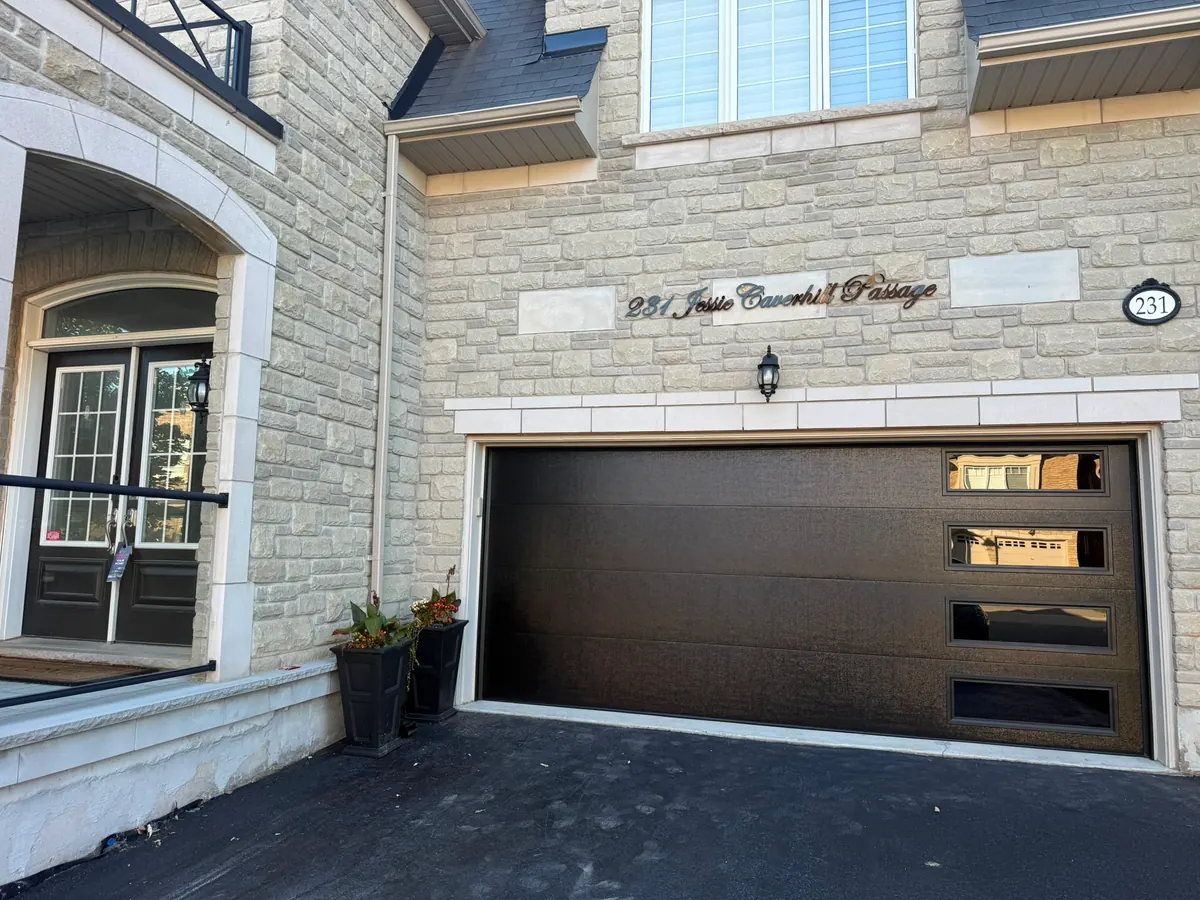
- Skip the low window inserts. They're optional at $125 per window on a new door — going without them costs nothing extra, and it removes a glass panel at exactly the height curious hands and stray balls reach.
- Consider a smart or myQ opener ($760–$1,200 installed) instead of a basic chain-drive unit. Being able to pull up an open/close history in an app is a genuinely useful thing for a business that occasionally has to reassure a parent — or a licensing officer — that the door isn't being left cycling unattended.
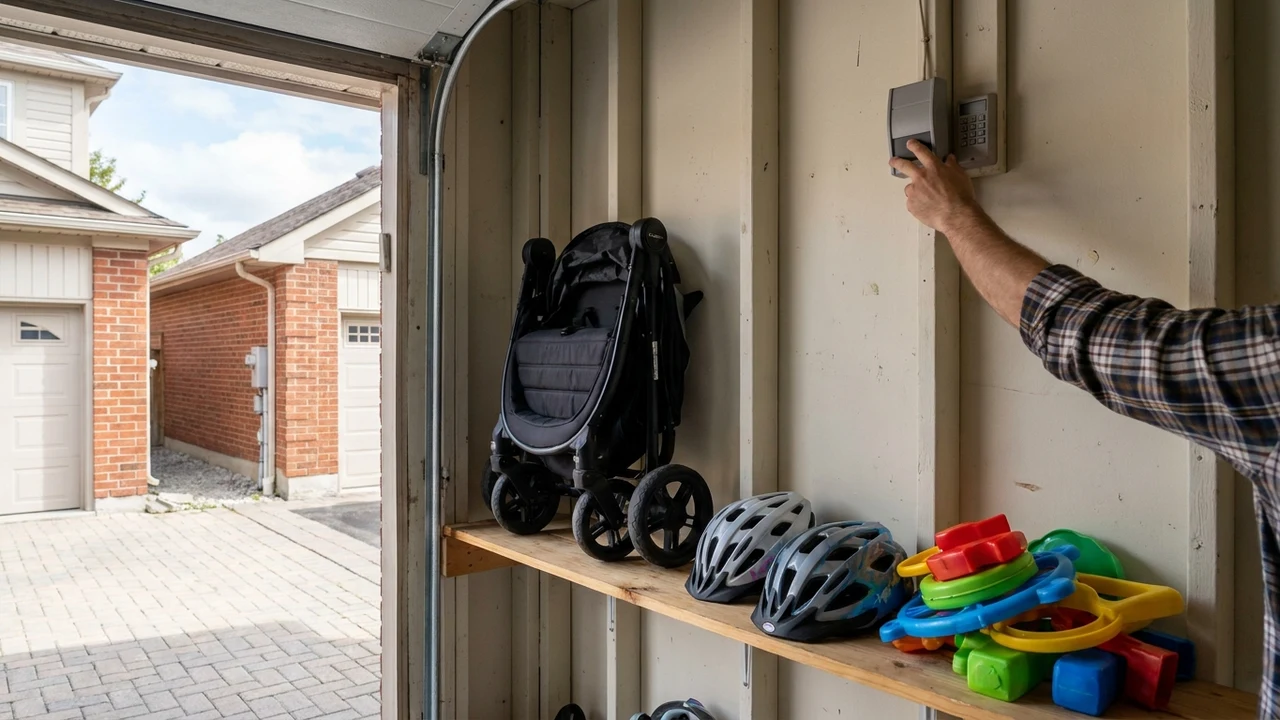
- Add a keypad if you don't already have one. It's a cleaner way to control who has access than handing out remotes clipped to sun visors, and codes are easier to change than remotes are to collect back.
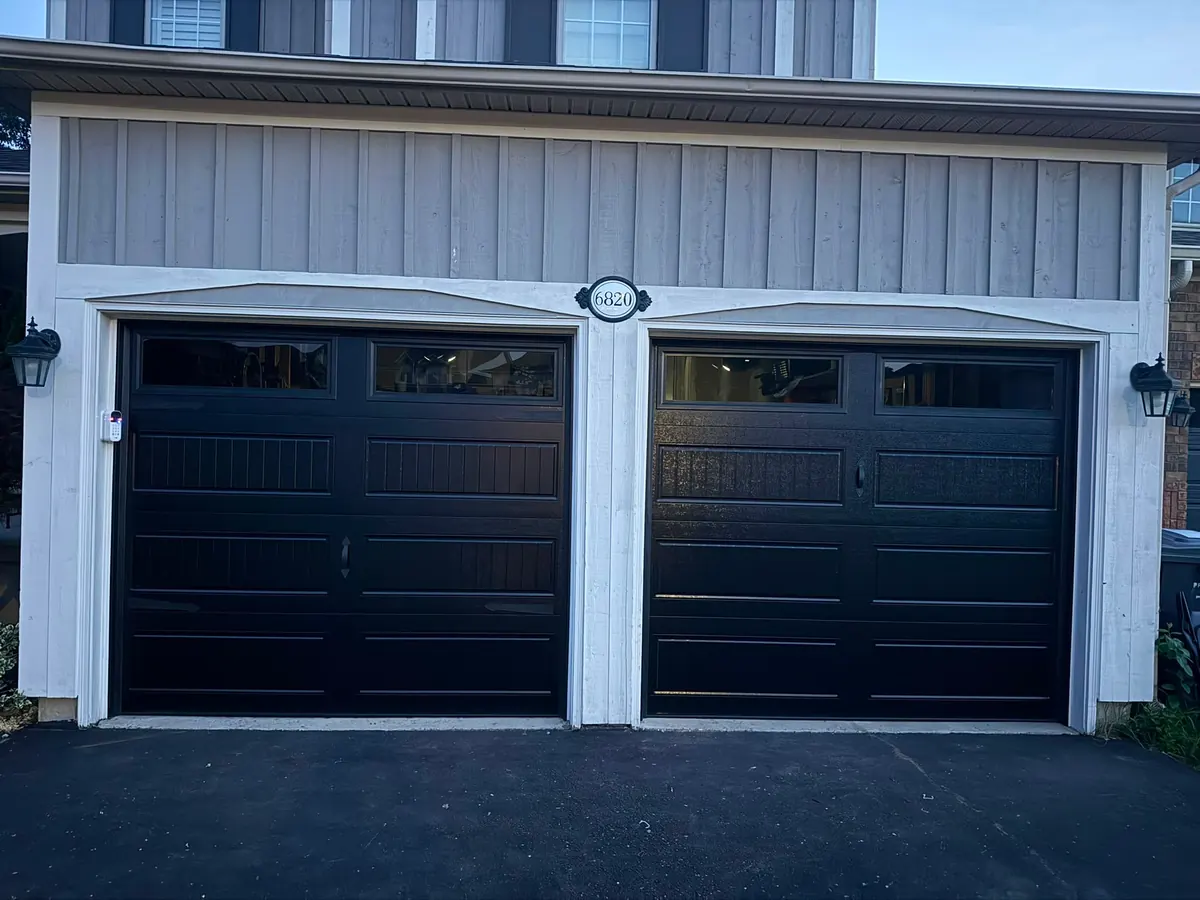
Standard door colours — white, almond, sandstone, charcoal, dark gray, brown, dark brown, black — carry no upcharge, so there's no cost trade-off in choosing the plainer, lower-visibility option. If you're weighing a full install against a repair, run the numbers on our price calculator before you decide.
Test auto-reverse monthly — the two tests every caregiver should know
Every opener sold in North America since the early 1990s has been required to auto-reverse when it senses an obstruction, using either contact pressure or a photo-eye beam near the floor. That system only protects anyone if it's actually still working, and the honest answer is that most households never check it after the installer leaves. A daycare shouldn't be "most households."
| Test | How to run it | Pass sign |
|---|---|---|
| Object test | Lay a 2x4 or a full roll of paper towels flat on the floor in the door's path, then close the door normally. | Door touches the object and immediately reverses back up. |
| Photo-eye test | While the door is closing, pass a broom handle through the sensor beam (about 4–6 inches off the floor) without touching the door itself. | Door stops and reverses without any contact at all. |
Do both once a month, not just once a year at your annual inspection, and keep a written date next to each test — a simple line in a binder is enough. If either test fails, stop using the door and call for a sensor repair before reopening it to families; sensor repair and realignment runs $120–$180.
Keep remotes, wall consoles, and keypad codes out of reach
The wall-mounted push-button console should sit at least five feet up — most are installed there anyway to meet code, but it's worth confirming on a door you inherited rather than assuming. A toddler standing on a step stool or a riding toy can reach lower than you'd expect.
For the keypad code itself, treat it the way you'd treat an alarm code, not a fun number to make memorable for staff. Avoid the daycare's street address, a child's birthday, or anything posted anywhere visible to families. If you ever notice a child has watched the code entered enough times to repeat it, change it that day — it takes a technician a few minutes during a routine service call and isn't something you need to schedule a separate visit for.
Portable remotes belong in a locked drawer or an office shelf, not clipped to a stroller handle or left on a hook by the door where a child heading outside could grab one on the way past.
Treat the garage door as a supervised zone during drop-off and pickup
Never let a child stand in the garage, even briefly, while the door is moving — not to say goodbye through the gap, not to grab a bike. Run the door fully open or fully closed; a door left resting halfway invites someone to duck under it, and it's exactly the situation an auto-reverse sensor isn't designed to catch, since nothing is obstructing the beam.
If the garage doubles as the entry vestibule for drop-off, a physical gate or barrier at the interior door step keeps a toddler from wandering toward the overhead door while you're greeting the next family. And during the pickup rush, when parents are backing cars in and out of a shared driveway, that's the moment a moving vehicle and a moving door overlap — worth a specific rule for staff, not just a general "watch the kids" reminder.
What a licensing walkthrough actually asks of your garage
Ontario's Child Care and Early Years Act licensing visits assess the full physical space children can access — not just the playroom. If your garage sits along the route to the backyard, houses storage the kids pass by, or connects directly to a play area, expect it to come up during a walkthrough. Exactly what your licensing officer wants to see can vary, so this isn't a substitute for asking your own agency directly. But in practice, a functioning auto-reverse, no exposed pinch points, and no obvious hazards within reach are the baseline, and a written log of your monthly tests is a simple paper trail that answers the question before it's fully asked.
A maintenance rhythm that keeps you ahead of an inspection
Book a full tune-up twice a year — spring and fall — rather than waiting for something to squeak. At $120, it covers lubrication, a balance check, safety sensor alignment, and hardware tightening, which is exactly the set of things that drift out of spec faster on a door cycling a dozen times a day.
Between visits, don't let small symptoms sit over a weekend the way you might in a house with no kids using the driveway daily:
- Grinding or rattling rollers — replace before they seize, $120–$220.
- Fraying or visibly loose cables — $180–$260, and not something to wait on.
- Blinking sensor LED — the door will likely refuse to close on its own, which is inconvenient but safe; still worth a $120–$180 repair the same week rather than working around it.
The service call itself is always free with any repair — the $120 diagnostic fee only applies if you decide not to proceed once a technician has assessed the door.
Royal Garage Doors recommendation
We've been doing this across the GTA, and licensed home daycares are one of the few customer groups where "it's probably fine" genuinely isn't good enough — there are kids on the other side of that door twice a day, five days a week. Book a twice-yearly maintenance visit, run the monthly two-minute test yourself in between, and mount the console and keep the codes the way you'd want a stranger's daycare to handle it if your own child were dropped off there.
If it's time for a sensor check, a spring upgrade to a double setup, or a full door replacement before your next licensing renewal, see our full pricing page for current rates, or book a visit directly — Royal Garage Doors has customer feedback on its Etobicoke Google profile across Mississauga, Toronto, and the surrounding GTA.
Related reading: Garage Door Safety for Pets and Kids: A GTA Parent's Checklist.
Frequently Asked Questions
Do Ontario home daycare licensing inspectors check garage doors?
Licensing visits under the Child Care and Early Years Act assess the full physical space children can access, so if your garage sits on the route to the backyard or connects to a play area, it can come up during a walkthrough. Exact expectations vary by licensing officer, so confirm specifics with your own agency, but a working auto-reverse and no exposed hazards within reach are the baseline.
How often should we test the auto-reverse safety feature?
Monthly, using two quick tests: place a 2x4 or a roll of paper towels in the door's path and confirm it reverses on contact, then wave a broom handle through the photo-eye beam near the floor and confirm it reverses without contact. Log the date each time you test.
Where should the garage remote and keypad code be kept?
Wall consoles should sit at least five feet up, out of a toddler's reach even standing on a stool. Portable remotes belong in a locked drawer, not clipped to a stroller or hung by the door, and the keypad code should never be a birthday or the daycare's address — change it immediately if a child ever repeats it.
Should a daycare upgrade to a smart or myQ opener?
It's worth considering. A smart/myQ opener runs $760-$1,200 installed and lets you check an open/close history in an app, which is a useful record to have if a parent or licensing officer ever asks how the door is being operated day to day.
Is a blinking sensor light an emergency, or can it wait?
It's not an emergency — the door will typically just refuse to close on its own until it's fixed, which is inconvenient but safe. Still, treat it as a same-week repair rather than something to work around, since sensor repair and realignment is $120-$180 and the service call is free with the repair.
Sources & standards: Garage door safety follows the UL 325 standard for automatic operators. For safe manual operation, see Chamberlain's emergency-release guidance. Pricing reflects current Royal Garage Doors rates for the GTA.
The bottom line: done right, the result is a garage door that opens quietly, balances correctly and is safe to use every day — backed by Royal's 1-year labour warranty so the outcome lasts.