Garage Door Sizing for Trucks, Vans, and Oversized Vehicles

Royal Garage Doors has customer feedback on its Etobicoke Google profile and technicians with hands-on experience installing and repairing doors across Toronto and the wider GTA.
How tall does a garage door need to be for a truck or van?
Garage door sizing for trucks, vans, and taller SUVs comes down to real clearance, not the door's nominal height — a "7-foot" door leaves less usable room than the number suggests once track and hardware are installed.
Is a standard 7-foot garage door tall enough for a full-size pickup truck?
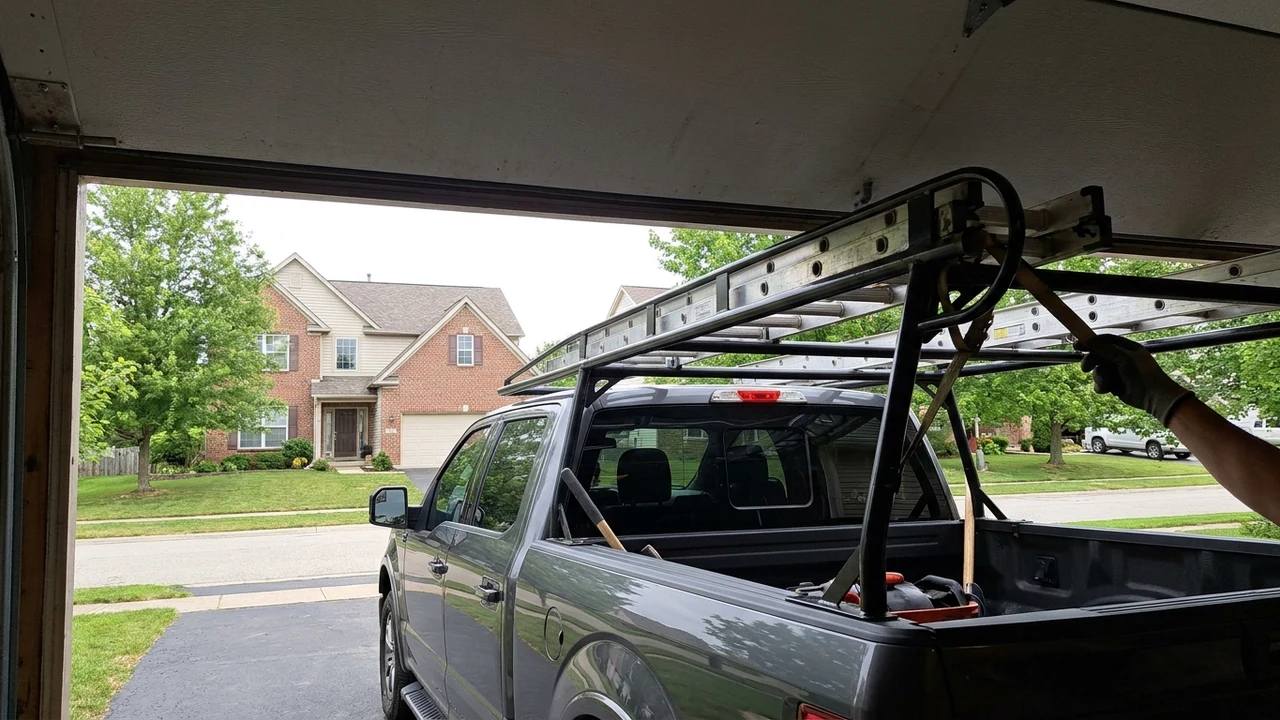
For most stock half-ton pickups, yes. Add a ladder rack, a rooftop cargo box, a plow mount, or a lift kit, and clearance gets tight fast — measure the truck's
- Customer feedback
- Read our Google reviews (Etobicoke profile)
- Experience
- Garage door service across the GTA
- Repair warranty
- 1-year parts and labour unless a specific written warranty overrides it
- Author
- Royal Garage Doors, Garage door repair and installation
Measure the vehicle, not the spec sheet
Most homeowners size a garage door around the door — width for the car, done. That works fine until you trade a sedan for a crew-cab pickup or a cargo van, and suddenly the truck that "should" fit is scraping the weatherstripping or won't clear the header at all.
The fix starts before you call anyone: measure your actual vehicle at its tallest point, with everything that's normally mounted on it. That means the ladder rack, the rooftop cargo box, the plow mount, the shell, the antenna if it's rigid — not the printed height on the window sticker, which reflects the vehicle as it left the factory with nothing added. A stock half-ton pickup might sit well under 7 feet. The same truck with a full-size ladder rack bolted on can gain several inches you won't see on any spec sheet.
Why a "7-foot door" doesn't give you 7 feet of clearance
A standard residential garage door is sold as 7 feet tall, and that number describes the door panel — not the usable clearance underneath it. Once the door is installed, the horizontal track, the roller hardware, and the weatherstripping along the bottom all sit inside that opening and shave a bit off the real number. It's a small margin, but it's exactly the margin that matters when a roof rack or a lift kit has you within an inch or two either way.
This is the detail that catches people off guard: the door isn't undersized, the assumption was. If your vehicle's actual height is close to 7 feet before you even factor in hardware clearance, treat that as a warning sign, not a coin flip.
Where trucks and vans actually run out of room
In practice, three vehicle categories account for almost every clearance call we get:
- Crew-cab and extended pickups with roof-mounted gear. Ladder racks, toolboxes, and cargo carriers are the single most common reason a truck that fit last year doesn't fit this year.
- Lifted trucks and SUVs. A 2–4 inch suspension lift is a popular upgrade and a very common reason for a mid-renovation call about door height.
- High-roof cargo vans. Sprinter- and Transit-style high-roof vans are built for standing room inside the cargo box, which pushes their overall height well past what most residential garages — and most residential doors — were ever designed to clear.
| Door height | Works well for | Gets tight with |
|---|---|---|
| Standard 7 ft | Sedans, most crossovers and SUVs, stock half-ton pickups | Ladder racks, rooftop cargo boxes, plow mounts, modest lift kits |
| Tall 8 ft | Lifted trucks, work vans with roof racks, oversized SUVs | High-roof cargo vans, RVs, anything close to 9 feet tall |
The 8-foot-tall option — and why it isn't a simple swap
An 8-foot-tall door adds a full foot of opening height over the standard size, which solves the clearance problem for most lifted trucks and rack-equipped vans. But it's not a stock item you order the way you'd pick a door color — a taller opening changes what has to happen above and behind it, which is why it's priced per garage during a proper measurement rather than off a flat list. If a taller vehicle is part of your household now or on the horizon, mention it when you book a quote so the door can be sized correctly the first time instead of retrofitted later.
Headroom and backroom: what a taller door needs behind the scenes
Two measurements decide whether a taller door is even possible in your garage, and neither one is the door height itself:
- Headroom — the space between the top of the door opening and your ceiling (or any ductwork, electrical conduit, or beams up there). The torsion spring and horizontal track mount in that space, and a taller door needs more of it, not less.
- Backroom — the horizontal track running along the ceiling toward the back of the garage. A taller, heavier door needs a properly matched track and spring set to travel that distance safely and hold its balance over time.
This is also where opener sizing comes in. A taller door is heavier and travels farther per cycle, which can call for different spring tension and sometimes a different opener setup than what a standard 7-foot door uses. Installed doors carry a 5-year hardware warranty, and that only holds up if the spring and track hardware were matched to the door's actual height and weight from day one — not left over from a smaller opening.
Width matters too, especially for extended trucks
Height gets most of the attention, but width and turning clearance cause their own headaches with longer trucks and vans. A single-car 8-foot-wide opening leaves very little side margin for mirrors on a full-size crew cab, especially if you're turning in from an angled driveway rather than pulling straight in. If you're sizing a garage around a specific truck or van, walk the actual approach angle in your driveway before settling on a width — a door that's technically wide enough on paper can still feel like threading a needle every time you park.
If a taller door isn't in the cards
Not every garage has the headroom for an 8-foot door, especially older builds with lower ceilings or ductwork running close to the opening. If that's your situation, the practical options are usually to remove or fold down roof-mounted racks before pulling in, park the taller vehicle outside or under a carport, or — if you're planning a renovation anyway — flag the ceiling height as something to address before the new door goes in rather than after. A quick on-site check will tell you which of those you're actually working with.
Royal Garage Doors recommendation
If you've added a truck, a work van, or anything with a roof rack to the household, don't guess at whether it'll clear the garage — measure the vehicle's tallest point with everything mounted, and get an on-site check of your headroom and backroom before you order a door. Royal Garage Doors has sized doors for GTA driveways and has customer feedback on our Etobicoke Google profile, and we'll tell you plainly if a standard 7-foot opening works for your vehicle or if you need the taller option. Installed doors start at $1,350 for an 8×7 single, with sizing up to a 16×7 double at $2,300 — see the full pricing page for the complete size and finish breakdown, or book a sizing consultation and we'll measure it properly the first time.
Related reading: Standard Garage Door Sizes: Single-Car vs Double-Car.
Frequently Asked Questions
Is a standard 7-foot garage door tall enough for a full-size pickup truck?
For most stock half-ton pickups, yes. Add a ladder rack, a rooftop cargo box, a plow mount, or a lift kit, and clearance gets tight fast — measure the truck's actual tallest point with everything attached, not the manufacturer's stock height.
How much taller is an 8-foot garage door than a standard 7-foot door?
A full extra foot of opening height. That covers most lifted trucks and rack-equipped vehicles that don't clear a standard door, though your actual usable clearance still depends on your garage's headroom and the track and spring hardware installed above the opening.
Will a high-roof cargo van like a Sprinter or Transit fit in a residential garage?
Usually not. High-roof cargo vans commonly run taller than even an 8-foot garage door opening, which is why most delivery and trade fleets park them outside or in a dedicated commercial bay rather than a home garage.
Does upgrading to a taller garage door mean I need a different opener or springs?
Often yes. A taller door is heavier and travels farther, which can call for different spring sizing and track configuration — that's why an 8-foot door is measured and priced per garage rather than sold off a flat list.
How do I know if my garage even has room for a taller door?
It comes down to headroom (the space between the top of the opening and the ceiling, ductwork, or wiring) and backroom (horizontal track clearance toward the back of the garage). A technician checks both during an on-site measurement before you commit to a taller opening.
Sources & standards: Garage door safety follows the UL 325 standard for automatic operators. For safe manual operation, see Chamberlain's emergency-release guidance. Pricing reflects current Royal Garage Doors rates for the GTA.
The bottom line: done right, the result is a garage door that opens quietly, balances correctly and is safe to use every day — backed by Royal's 1-year labour warranty so the outcome lasts.