Garage Door Won't Open More Than a Few Inches

Royal Garage Doors has customer feedback on its Etobicoke Google profile and technicians with hands-on experience installing and repairing doors across Toronto and the wider GTA.
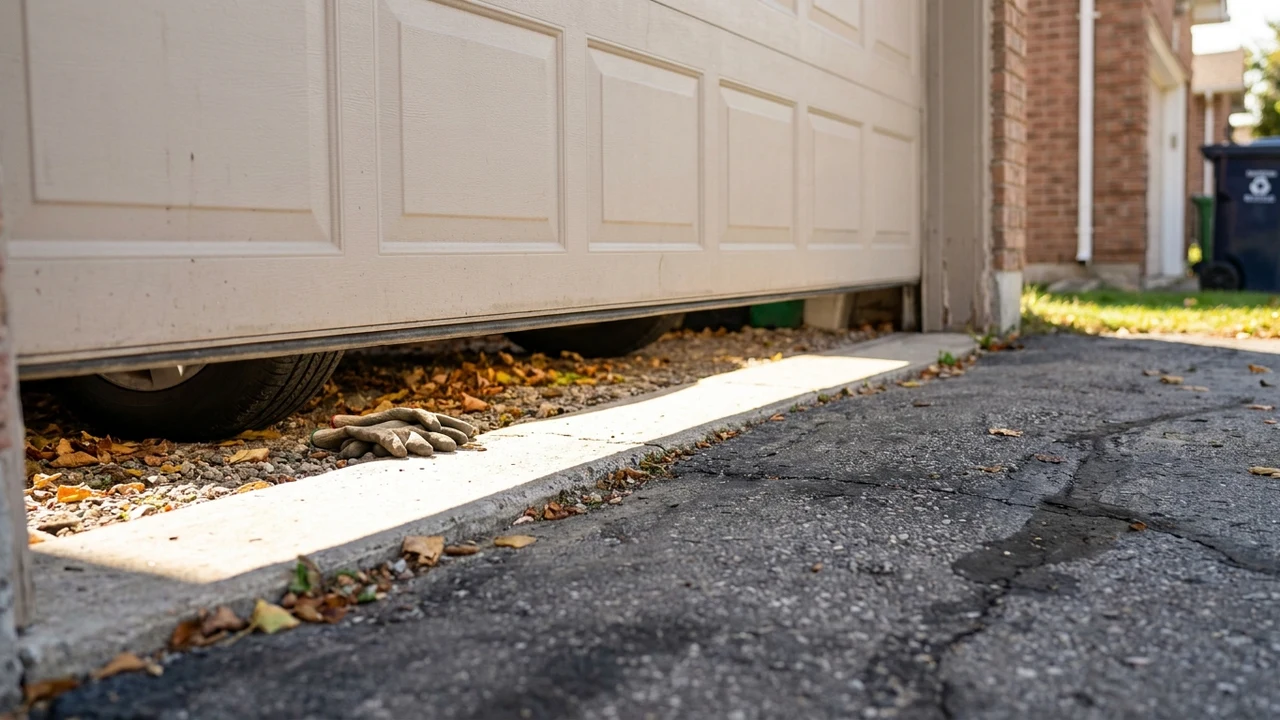
Why won't my garage door open more than a few inches?
A garage door that won't open more than a few inches usually means one of three things: a travel-limit setting that's drifted too low, an obstruction tripping the safety sensor, or a broken spring forcing the opener to lift the door's full weight.
Why does my garage door only open a few inches and then reverse?
That's almost always the opener reacting to resistance — either the force-limit safety tripping because a spring can't properly counterbalance the door's weight, or the door catching on a track
- Customer feedback
- Read our Google reviews (Etobicoke profile)
- Experience
- Garage door service across the GTA
- Repair warranty
- 1-year parts and labour unless a specific written warranty overrides it
- Author
- Royal Garage Doors, Garage door repair and installation
Three different problems produce the exact same symptom
A garage door that lifts three or four inches and then stops — or lifts a few inches, reverses, and closes again — has one of three causes, and they call for three completely different responses. A worn travel-limit setting is a five-minute fix. An obstruction tripping the safety sensors is worth a quick inspection. A broken or badly weakened spring means the opener is trying to lift the full weight of the door on its own, which it was never built to do, and that's the one you don't try to power through.
The good news is you can usually tell which one you're dealing with in under two minutes, before you call anyone.
Listen to the motor before you look at anything else
Stand next to the opener unit on the ceiling and trigger the door with the remote or wall button.
- Motor runs smoothly, no strain, door just stops cleanly at the same low height every time: this points to the travel limit — the setting that tells the opener how far "fully open" is — being set too low, or having drifted from age, a power blip, or a recent reset of the opener's logic board.
- Motor labours, the chain or belt jerks or clicks, then the opener stops or reverses a few inches up: that's the sound of the opener trying to lift weight it isn't sized for. Garage door openers are built to move an already-balanced door, not carry it — the spring does the actual lifting. A strained motor on a partial lift is the classic sign the spring has broken or lost most of its tension.
- Door catches, scrapes, or stops unevenly, one side higher than the other, at a specific point: that's usually mechanical — a bent track section, a roller off the track, or something physically in the way.
The one test that settles it: disconnect the opener and lift by hand
Pull the red release cord hanging from the opener rail. That disengages the trolley from the door so you're lifting it manually, with no motor involved. Then lift the door yourself, slowly, from the bottom.
A properly balanced door with good springs will feel close to weightless and should stay put, on its own, at roughly waist height or higher when you let go. If instead the door feels like dead weight, wants to slam back down, or you can't get it more than a few inches without real effort, the spring is broken or has lost most of its tension. That's true whether the door runs on a single torsion spring or a double setup — a healthy spring system carries essentially all of the door's weight, not the opener.
Reconnect the opener by pulling the release cord back toward the door (or following the label on your specific trolley) before using the remote again.
Quick comparison
| What you notice | Likely cause | Safe to check yourself? |
|---|---|---|
| Motor sounds normal, door stops at the exact same low spot every time, no reversal | Travel limit set too low | Yes — adjustable at the opener unit |
| Motor strains or clicks, door feels like dead weight when lifted by hand | Broken or weak spring | No — spring tension is dangerous, technician only |
| Door catches or scrapes at one specific point, uneven lift | Off-track roller or bent track | Inspect visually only, don't force the track back |
Adjusting the travel limit — only if the motor sounds fine
If the hand-lift test showed the door lifts easily and stays up on its own, the spring is fine and you're almost certainly dealing with the travel limit. Most chain and belt-drive openers — LiftMaster, Chamberlain, Genie — have an "up" limit adjustment, either a screw or dial pair on the motor unit or a setting inside the app on newer smart openers. Turning the up-limit adjustment a few small increments at a time, testing after each change, will usually walk the door back up to full height.
What you should not do is turn up the force setting to push through resistance. Force and travel limit are two different dials, and cranking force to muscle the door open past a point where it's catching just masks whatever is actually stopping it — which, if it's an obstruction sensor doing its job, is a safety feature you don't want to defeat.
Why a bad spring always stops the door at almost the same height
A torsion spring mounted above the door — or a pair, on wider doors — does the real work of counterbalancing anywhere from around 100 to over 400 pounds of door, depending on size and material. The opener motor is only designed to supply the last bit of force to move an already-balanced door; think of it as a helper, not a crane. When a spring snaps or fatigues badly, the opener suddenly has to lift the door's true dead weight on its own. Most openers have a built-in force-limit safety that trips after a few inches of that kind of strain, which is exactly why the door stops at a consistent, repeatable low point instead of somewhere random.
If you look up at the torsion spring above the door and see a visible gap in the coil, that's a broken spring, full stop. On older GTA homes — plenty of the 20-plus-year-old builds around Etobicoke, Scarborough, and Mississauga are still running original springs — a spring can also simply fatigue to the point of barely holding tension without ever fully snapping, which produces the same "stops after a few inches" symptom with no obvious visible break.
What happens if you keep trying to force it
Repeatedly triggering the opener against a broken spring doesn't just fail to open the door — it puts real wear on the opener itself. The gear inside a chain or belt-drive unit is a common casualty of being run against full dead weight over and over, and a logic board can also take damage from repeated force-limit trips. What starts as a $280 single-spring repair can turn into a spring replacement plus an opener repair, $120–$550 depending on what failed, if the motor gets pushed hard enough, enough times.
When to inspect it yourself and when to leave it alone
Checking the travel-limit dial, glancing at the torsion spring for a visible gap, and doing the manual hand-lift test are all safe for a homeowner to do. What isn't safe is touching the spring itself, its winding cones, or the cable drums. Torsion springs hold enough stored tension to cause serious injury if they let go while someone is working on them, which is exactly why spring work is done with a technician on site rather than as a DIY repair.
If the issue turns out to be track-related — a roller that's jumped the track, or a section that's visibly bent — resist the urge to pry it back into place. A misaligned track under load can whip or drop the door unexpectedly.
Royal Garage Doors recommendation
A spring problem and a limit-setting problem can sound almost identical on a bad day, so once you've run the hand-lift test and know the door feels heavy, the fastest way to get a firm answer is a technician diagnosis rather than more guessing. Royal Garage Doors has been repairing torsion springs across Toronto and the GTA, customer feedback is available on our Etobicoke Google profile, and the service call is free with any repair. A single torsion spring replacement runs $280 plus tax, a double spring setup is $320–$460, and every spring repair carries our 3-tier warranty.
See current rates on our pricing page, or book a diagnostic visit and we'll tell you within minutes of arriving whether it's the spring, the limit setting, or something in the track.
Related reading: Why Your Garage Door Won't Stay Open.
Frequently Asked Questions
Why does my garage door only open a few inches and then reverse?
That's almost always the opener reacting to resistance — either the force-limit safety tripping because a spring can't properly counterbalance the door's weight, or the door catching on a track obstruction. Listening for a straining or clicking motor usually tells you which.
Can I just adjust the opener settings to fix it?
Only if the cause is the travel-limit setting, the dial or app setting for how far "open" is. If the motor is straining or the door feels heavy when lifted by hand, that's a spring issue, and increasing the force setting to compensate is not safe.
How do I know if my garage door spring is broken?
Look for a visible gap in the coil of the torsion spring mounted above the door, that's a clear break. A spring can also simply lose tension with age without snapping, which shows up as the same stops-after-a-few-inches, feels-heavy symptom.
Is it safe to keep trying the opener if the door won't fully open?
Repeated attempts against a broken spring can damage the opener's gear or logic board, turning a $280 spring repair into a spring replacement plus a $120-$550 opener repair. Stop trying the remote once you've confirmed the door feels heavy by hand.
How much does it cost to fix a garage door that won't open all the way?
It depends on the cause. A single torsion spring replacement is $280 plus tax, a double spring setup is $320-$460, and track or roller issues run $120-$450 depending on the repair. The service call is free with any repair Royal Garage Doors performs.
Sources & standards: Garage door safety follows the UL 325 standard for automatic operators. For safe manual operation, see Chamberlain's emergency-release guidance. Pricing reflects current Royal Garage Doors rates for the GTA.
The bottom line: done right, the result is a garage door that opens quietly, balances correctly and is safe to use every day — backed by Royal's 1-year labour warranty so the outcome lasts.