Garage Doors for Heritage and Designated Homes in Toronto

Royal Garage Doors has customer feedback on its Etobicoke Google profile and technicians with hands-on experience installing and repairing doors across Toronto and the wider GTA.
What changes when you need a garage door for a heritage-designated home?
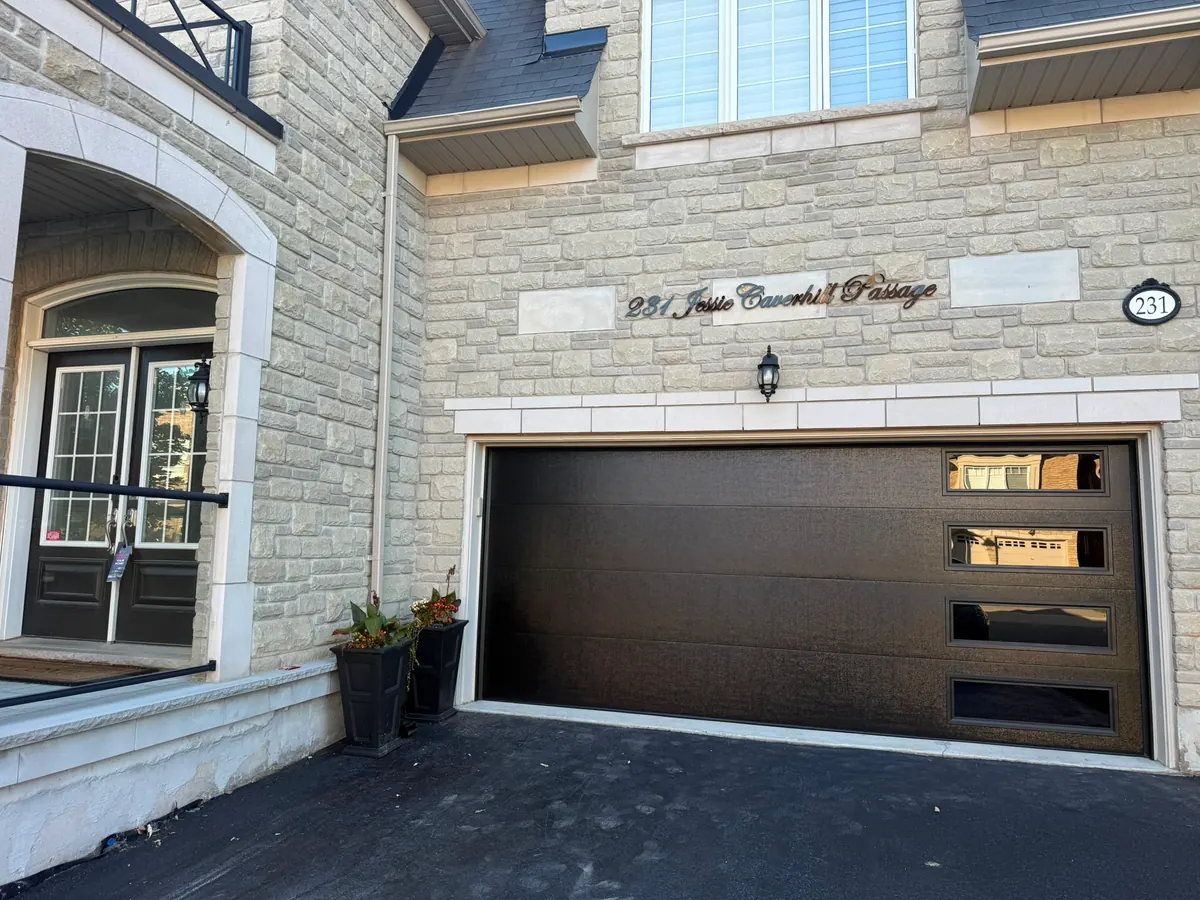
If your Toronto home carries heritage designation or sits inside a Heritage Conservation District, your garage door usually needs to match the home's original era before a new one goes in — carriage-style panels, muted colours, and sometimes a woodgrain finish.
Do I need a permit to replace a garage door on a heritage-designated home in Toronto?
If the property is formally designated under Part IV of the Ontario Heritage Act, or sits in a Part V Heritage Conservation District, yes — most Toronto HCD plans specifically
- Customer feedback
- Read our Google reviews (Etobicoke profile)
- Experience
- Garage door service across the GTA
- Repair warranty
- 1-year parts and labour unless a specific written warranty overrides it
- Author
- Royal Garage Doors, Garage door repair and installation
What "heritage" actually means for your garage door
Not every older home in the GTA carries the same level of protection, and the garage door rules change depending on which category your property falls into. In Toronto, that usually comes down to two things under the Ontario Heritage Act:
- Individually designated (Part IV): the property itself is listed by bylaw as a heritage property. Exterior changes visible from the street — including a garage door — typically need a Heritage Permit before work starts.
- Heritage Conservation District, or HCD (Part V): your home sits inside a designated area, like parts of Cabbagetown, the Annex, Rosedale, or Riverdale, where the district's own plan sets rules for the whole streetscape, not just one house. Garage doors are commonly named in these plans because they're one of the largest visible surfaces on a front-facing façade.
There's also a third, lighter category: a property can be "listed" on the Heritage Register without being formally designated. Listing alone usually doesn't trigger a permit requirement for a garage door swap, but it's still worth a quick check with the City's heritage planning staff before you order anything — district rules and individual listings aren't always consistent, and it's a much cheaper phone call than a rejected application.
Why a plain steel door often gets sent back
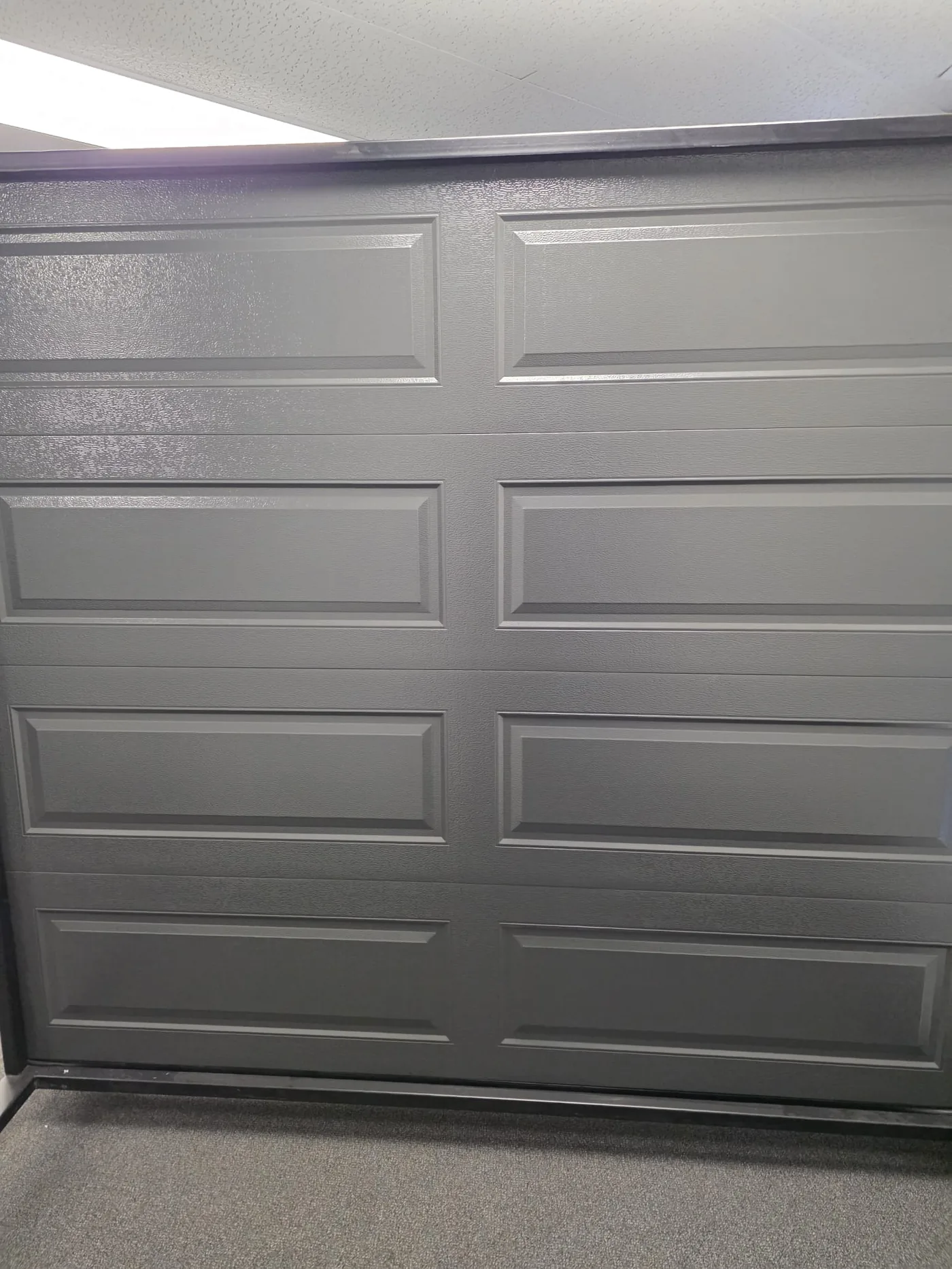
If your home doesn't carry any designation, a standard long-panel or short-panel steel door in a modern colour is a perfectly good choice. On a designated property or inside an HCD, the same door is one of the most common reasons a heritage application gets kicked back for revisions. It's not that the door is low quality — it's that a flat, mass-produced panel pattern reads as visibly modern against a century home's proportions, trim, and window rhythm. Reviewers are judging compatibility with the streetscape, not just whether the door works.
Carriage House and Carriage Overlay: the two options that usually clear review
This is where most heritage-appropriate installs land, and both are still ordinary insulated sectional doors underneath — same torsion spring, same opener compatibility, same overhead operation. The difference is entirely in how the face of the door is built:
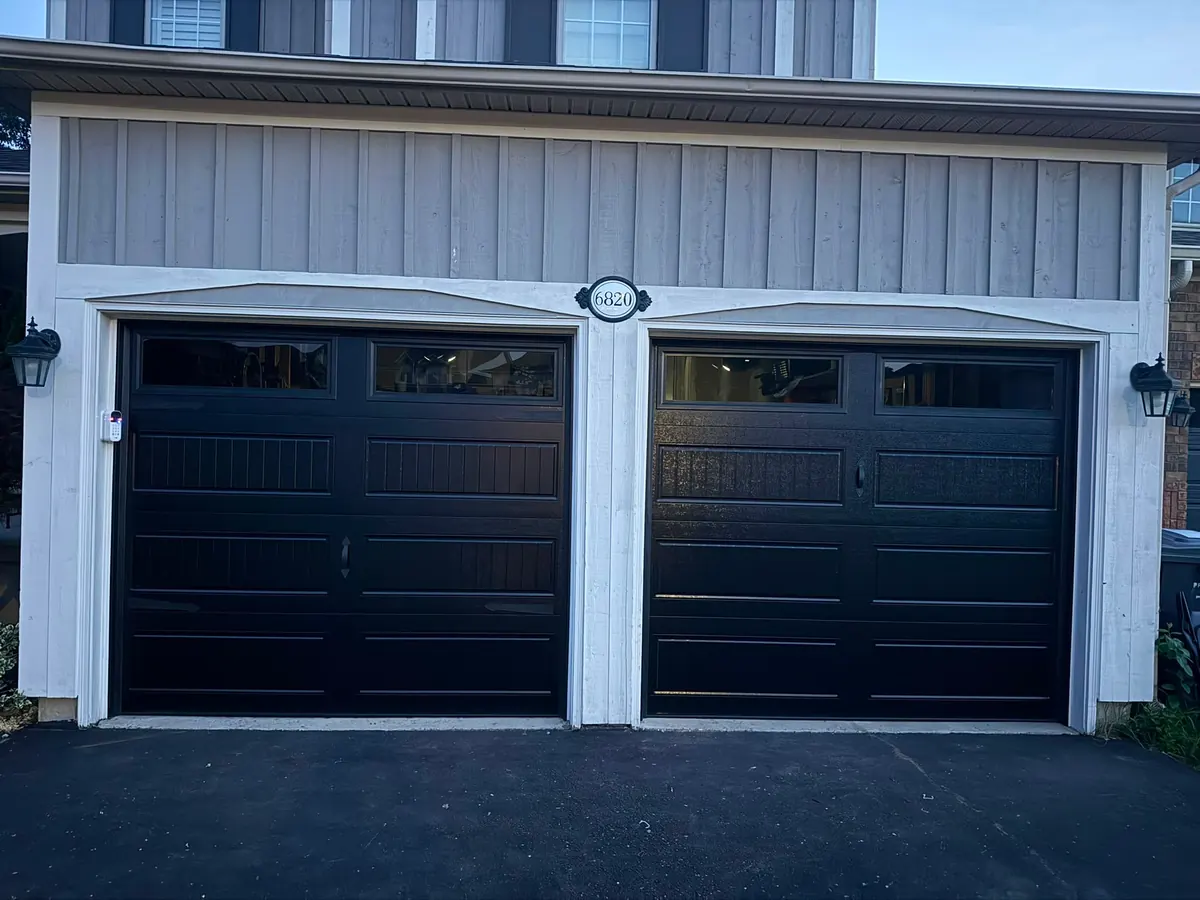
- Carriage House style: the panel layout is designed to mimic a traditional swing-out barn or carriage door, with raised or arched panel sections and decorative strap hinges and handles applied to the face. From the street it reads as a period door; mechanically it's a normal sectional door.
- Carriage Overlay: the same decorative hardware and trim elements are added on top of a standard steel panel door rather than built into a distinct panel shape. It's usually the more budget-friendly route to the same visual result, since you're adding overlay pieces to a standard door rather than changing the underlying panel style.
Both styles are available in the same size range as any other Royal Garage Doors install — sizing and base pricing follow the standard tiers regardless of which panel style you choose.
Material, colour, and window choices that matter to a heritage committee
Beyond the panel style itself, three choices tend to get the most scrutiny in a heritage review:
| Feature | Usually approved | Often flagged |
|---|---|---|
| Colour | Sandstone, Dark Brown, Dark Gray, Black, or a woodgrain finish | Bright white or an unusual accent colour on a period façade |
| Panel style | Carriage House or Carriage Overlay | Plain flush long-panel steel |
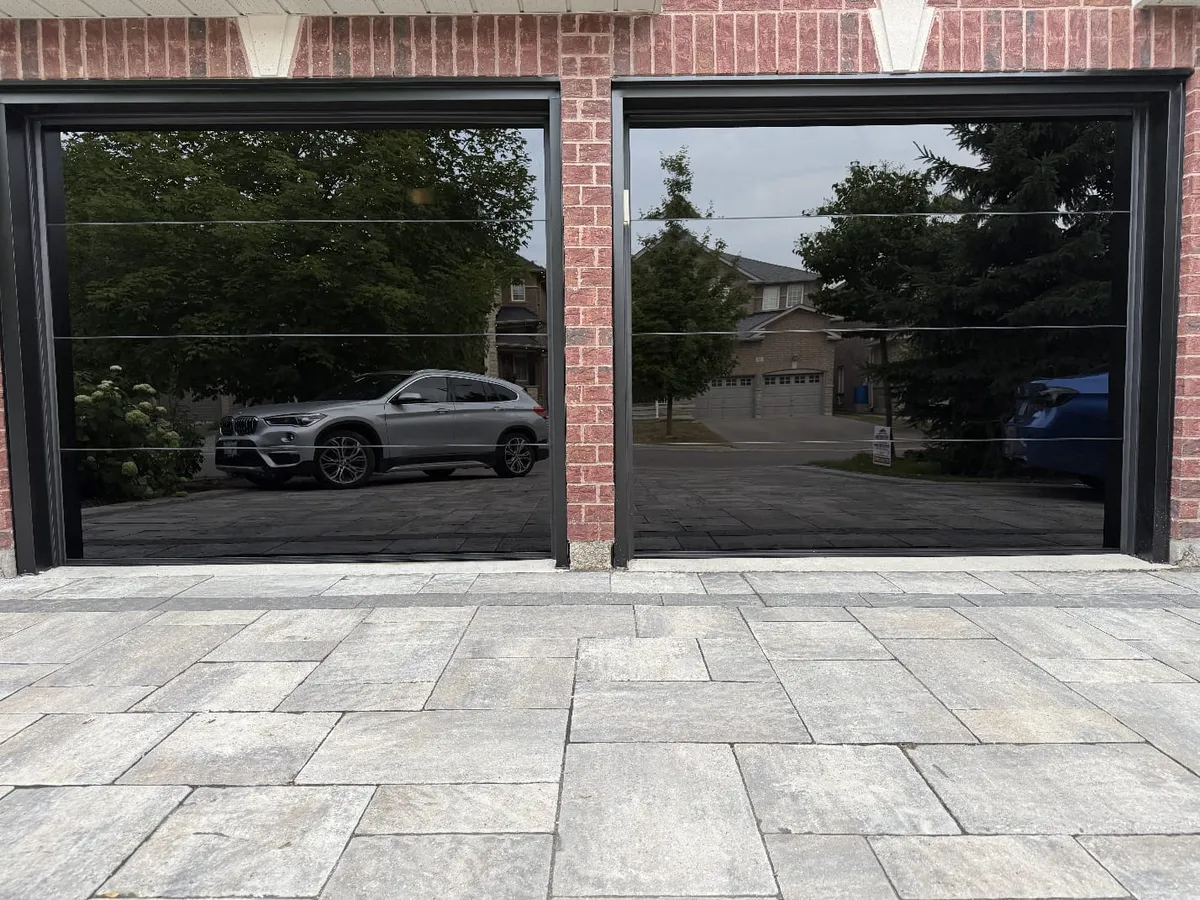
| Windows | Small grid-style inserts near the top row, if the original door had them | Large plain-glass panels across most of the door face |
A woodgrain finish, which is often used to approximate the look of real wood without the maintenance, runs $300 over a standard colour. Window inserts — useful if the district plan asks for something closer to the original door's proportions — price at $125 per window. Neither of those is heritage-specific pricing; they're the same finish and window options available on any Royal Garage Doors install, just chosen because they tend to fit period guidelines better.
Get the approval before you order, not after
The single most common mistake on a heritage property isn't picking the wrong style — it's ordering the door before confirming what's actually allowed. Heritage Permit review isn't instant; depending on the district and the time of year, a straightforward application can still take several weeks to move through the City's process, longer if it needs to go before a committee. Ordering a custom Carriage House door on spec, then finding out the district plan wants a different window pattern, means re-ordering and paying for the change twice.
The sequence that actually saves time:
- Confirm your property's status — individually designated, inside an HCD, listed, or none of the above — with the City's heritage planning staff.
- If a permit is required, get the district's design guidelines or your specific approval in hand before finalizing style, colour, and window choices.
- Bring that approved spec to your garage door quote, so what gets ordered matches what's actually allowed.
What working with Royal actually looks like on a heritage property
Royal Garage Doors doesn't file heritage permit applications and won't assume your property is clear to install on just because it's "only a garage door" — that call belongs to you and the City, since it depends on your specific designation or district plan. What we do is build and install to whatever the approved spec calls for: panel style, colour, window pattern, and size. If you're still narrowing down what a Carriage House or Carriage Overlay door actually looks like in person, our gallery is a useful starting point before you take options to the City or your district committee. Every install, heritage or not, still carries the same 1-year labour warranty, 5-year hardware warranty, and a lifetime panel warranty against rust-through perforation.
Royal Garage Doors recommendation
If you're on a heritage-designated property or inside a Toronto Heritage Conservation District, start with the City, not the door catalogue — confirm what's required before you fall in love with a specific style. Once you know what's approved, a Carriage House or Carriage Overlay door in a period-appropriate colour is usually the fastest path through review, and it prices the same way any other install does. Check current sizes and finishes on our pricing page, then book a consultation when you're ready to move forward — with garage door service across the GTA and customer feedback on our Etobicoke Google profile, we've worked plenty of these approvals before.
Related reading: Garage Doors for Century Homes: What Toronto's Older Houses Need and Garage Door Styles Guide: Which One Is Right for Your Home.
Frequently Asked Questions
Do I need a permit to replace a garage door on a heritage-designated home in Toronto?
If the property is formally designated under Part IV of the Ontario Heritage Act, or sits in a Part V Heritage Conservation District, yes — most Toronto HCD plans specifically list garage doors among the exterior features requiring a Heritage Permit, especially when the garage faces the street. A property that's only "listed" (not designated) usually doesn't trigger a heritage permit, but rules vary by district, so check with the City first.
What's the difference between a Carriage House door and a Carriage Overlay door?
A Carriage House door is styled to look like a traditional swing-out barn or carriage door, with raised or arched panels and decorative strap hinges built into the face, while still operating as a normal sectional overhead door. Carriage Overlay adds those same decorative hardware and trim elements on top of a standard steel panel door, which is usually the lower-cost way to get the same look.
Will Royal Garage Doors handle the heritage permit application for me?
No — the heritage permit is between you and the City, or your Heritage Conservation District's committee, since it depends on your property's specific designation and district plan. Royal Garage Doors builds and installs to whatever the approved permit specifies for style, material, and colour; bring us the approved details and we'll quote against them.
What door colours and materials typically get approved in a Heritage Conservation District?
Most Toronto HCD guidelines favour colours closer to a period palette — Sandstone, Dark Brown, Dark Gray, or Black — rather than bright white or an unusual accent colour on an older façade. A woodgrain finish over the door's standard colour, which adds $300, also tends to fare better in review than plain painted steel.
Does a heritage-appropriate garage door cost more than a standard one?
The door itself prices the same way as any other Royal Garage Doors install, by size — $1,350 for an 8x7 single up to $2,300 for a 15x7 or 16x7 double. What typically adds cost is the finish: a woodgrain finish is +$300, and window inserts, often used to mimic a carriage door's upper glass row, run $125 per window.
Sources & standards: Garage door safety follows the UL 325 standard for automatic operators. For safe manual operation, see Chamberlain's emergency-release guidance. Pricing reflects current Royal Garage Doors rates for the GTA.
The bottom line: done right, the result is a garage door that opens quietly, balances correctly and is safe to use every day — backed by Royal's 1-year labour warranty so the outcome lasts.