How to Properly Test Your Garage Door's Auto-Reverse Safety Feature

Royal Garage Doors has customer feedback on its Etobicoke Google profile and technicians with hands-on experience installing and repairing doors across Toronto and the wider GTA.
How do you test your garage door's auto-reverse safety feature?
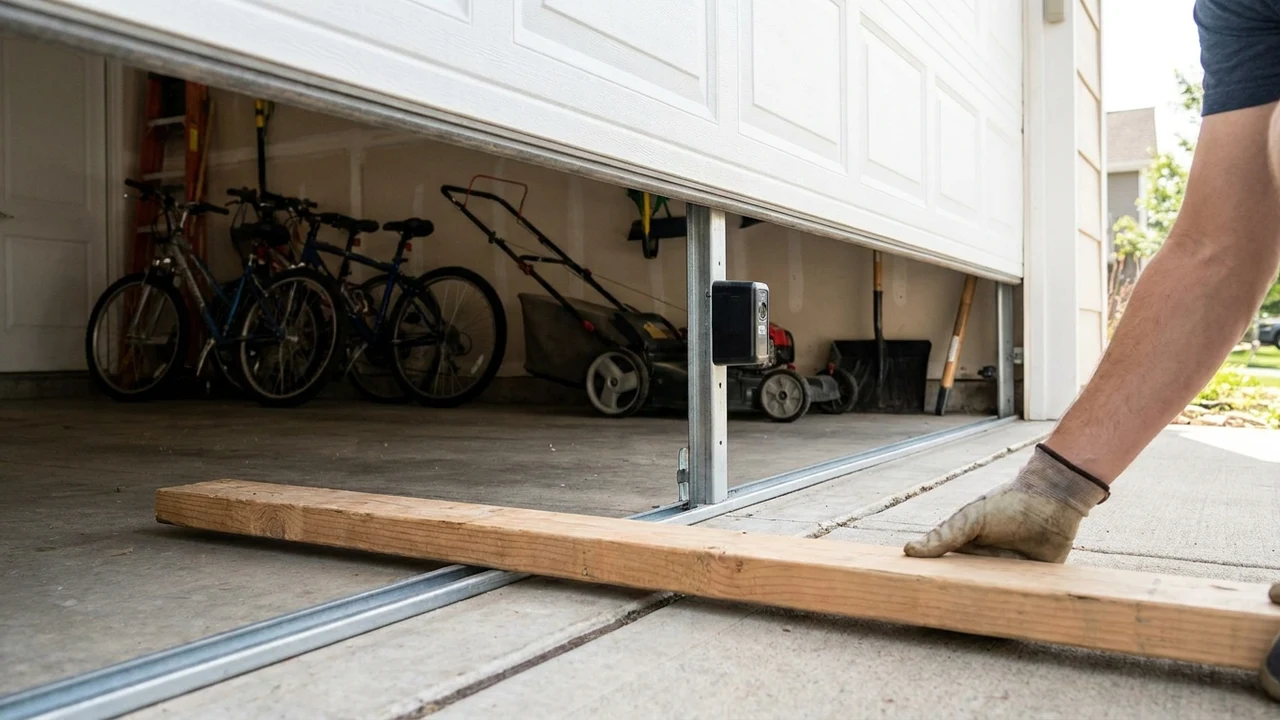
To test your garage door's auto-reverse safety feature, run two separate checks monthly: place a 2-inch board flat on the floor under the closing door to test mechanical force reversal, then wave an object through the photo-eye beam to test sensor reversal. Royal Garage Doors recommends a $120 tune-up if either test fails.
What is the 2-inch board test for a garage door?
It's the manufacturer-recommended way to test mechanical force reversal: lay a 2-inch-thick board flat on the floor under the closing door. A properly working opener will stop and reverse within
- Customer feedback
- Read our Google reviews (Etobicoke profile)
- Experience
- Garage door service across the GTA
- Repair warranty
- 1-year parts and labour unless a specific written warranty overrides it
- Author
- Royal Garage Doors, Garage door repair and installation
Two separate systems, not one
Every garage door opener built to modern safety standards has two independent ways to stop a closing door before it hurts someone or crushes something: mechanical force reversal, built into the opener's motor unit, and photo-eye reversal, triggered by the two infrared sensors mounted near the floor on each side of the track. They protect against different things. The photo-eye catches anything crossing the beam below sensor height — a pet, a toddler, a bike rolling through. Force reversal catches anything the door itself makes contact with, at any height, including the blind spot above the sensor beam.
Most homeowners only ever test one of these, usually by accident, when a kid or a broom handle breaks the photo-eye beam and the door pops back open. That's a good sign, but it tells you nothing about whether the force-sensing side works. A door can have a perfectly aligned, perfectly lit photo-eye and still fail to reverse if something makes contact with the door panel directly. Testing only the sensor gives you half the picture and a false sense of security about the other half.
The 2-inch board test: checking mechanical force reversal
This is the test manufacturers print on the warning label riveted to every opener unit, and it takes about two minutes:
- Find a piece of 2x4 lumber, or anything roughly 1.5 to 2 inches thick, and lay it flat on the garage floor, centered under where the door closes.
- Stand clear of the doorway — don't lean in to watch up close. Trigger the door from a safe distance using the wall button or remote.
- Close the door normally.
- Watch what happens the instant the bottom edge touches the board. A properly working opener stops and reverses back to the open position within about two seconds of contact.
- If it doesn't reverse — if it keeps pressing down on the board, stalls without reversing, or takes several seconds to react — stop using the door and don't repeat the test until it's been looked at.
Use an actual board for this, not your hand or foot. If the force sensing has failed, a 2x4 tells you that safely. A hand doesn't.
Testing the photo-eye reversal separately
This is not the same as confirming the sensor LEDs are lit and aligned. A sensor can look perfectly normal and still fail to trigger a reversal if the logic board's reversal circuit has degraded. You have to actually interrupt the beam while the door is in motion:
- Start the door closing with the remote or wall button.
- While it's still moving, before it reaches the floor, pass a broom handle or your leg through the beam between the two sensor eyes, a few inches off the ground.
- The door should stop and reverse immediately, well before it gets anywhere near the floor.
- If the door keeps closing through the interruption, the photo-eye's reversal function has failed, even if both LEDs read steady when you check them on their own.
The two tests at a glance
| System | What it protects against | How to test it | Sign of failure |
|---|---|---|---|
| Mechanical force reversal | Direct contact with the door itself, at any height | 2-inch board test | Door presses on or through the board instead of reversing within ~2 seconds |
| Photo-eye reversal | Anything crossing the beam near floor level | Break the beam with a broom handle while the door is closing | Door keeps closing even though the beam was interrupted |
How often to test: monthly, tied to something you already do
Opener manufacturers — Chamberlain, LiftMaster, Genie — all print "test monthly" on the safety label for a reason: these systems don't announce their own failure. A worn logic board or a sensor circuit that's stopped triggering reversals doesn't beep or flash a warning first. The door just keeps closing normally, right up until the one time it doesn't reverse on something that matters.
Tie the test to a date you already have a routine for — the same weekend you swap a furnace filter or check smoke detector batteries. GTA winters are worth an extra check in December and January specifically: condensation and frost on the sensor lenses can interfere with the beam, and cold can make a marginal logic board act up intermittently. Also re-test any time something could have knocked a sensor bracket out of position — a snow blower, a lawn mower, a kid's bike or hockey net against the track — or any time you've had opener work done, including a DIY force or travel-limit adjustment.
If a test fails, don't just turn up the force dial
Most openers have a force adjustment screw or dial on the motor unit, and it's tempting to nudge it up when a door seems to be "struggling" over the board or through the beam interruption. Don't. Increasing the force setting makes the door less sensitive to resistance — it takes more contact force to trigger a reversal, which is the opposite of what a safety system is supposed to do. If a door genuinely needs more force than it used to just to close under normal conditions, that's usually not a force-setting problem at all. It's a sign the springs are near the end of their life, the track is out of alignment, or the rollers are binding, and pushing the force dial up to compensate just masks a mechanical problem while degrading the one safety feature that's supposed to catch it.
A failure on either test, force reversal or photo-eye, means the door shouldn't be used until it's checked. Don't disable the sensors to get the door working "for now." That's the exact scenario the auto-reverse system exists to prevent.
Royal Garage Doors recommendation
Run both tests monthly, and treat a failure on either one as a same-week repair, not a maintenance-list item. Royal Garage Doors' $120 maintenance and tune-up package covers a full safety sensor check, door balance check, and hardware tightening in one visit — a straightforward way to catch a developing issue before it shows up as a failed reversal test. If a test does fail, the service call is free with any repair; see our full pricing page for current rates on sensor and opener repairs, or book a visit and a licensed technician can diagnose it, usually the same day.
Related reading: How to Fix a Garage Door Sensor.
Frequently Asked Questions
What is the 2-inch board test for a garage door?
It's the manufacturer-recommended way to test mechanical force reversal: lay a 2-inch-thick board flat on the floor under the closing door. A properly working opener will stop and reverse within about 2 seconds of touching the board instead of pressing through it.
How often should I test my garage door's auto-reverse safety feature?
Monthly, per the safety label on most openers (Chamberlain, LiftMaster, and Genie all recommend it). Also re-test after any opener repair, force or travel-limit adjustment, or after anything bumps a sensor bracket, like a snow blower or lawn mower.
My photo-eye sensors have steady LEDs — does that mean the auto-reverse safety feature is working?
Not necessarily. Steady LEDs only confirm the sensors are aligned and seeing each other. Whether the door actually stops when the beam is broken is a separate function, and it needs to be tested by interrupting the beam while the door is closing.
Can I adjust the force sensitivity myself if the board test fails?
You can locate the force dial on most opener units, but turning it up to make a struggling door pass the test is the wrong fix — it just makes the door less sensitive to resistance. A door that suddenly needs more force than it used to usually points to worn springs, a misaligned track, or binding rollers, which is worth having diagnosed rather than compensated for.
Do older garage door openers even have auto-reverse safety features?
Openers manufactured before the early 1990s often lack both mechanical force reversal and photo-eye sensors entirely. If your opener predates these features or can't be made to reliably pass either test, replacing it is usually safer than retrofitting — Royal Garage Doors installs new openers from $600 supplied and installed.
Sources & standards: Garage door safety follows the UL 325 standard for automatic operators. For safe manual operation, see Chamberlain's emergency-release guidance. Pricing reflects current Royal Garage Doors rates for the GTA.
The bottom line: done right, the result is a garage door that opens quietly, balances correctly and is safe to use every day — backed by Royal's 1-year labour warranty so the outcome lasts.