Garage Door Care for Home-Based Auto Enthusiasts and Hobbyists

Royal Garage Doors has customer feedback on its Etobicoke Google profile and technicians with hands-on experience installing and repairing doors across Toronto and the wider GTA.
How should auto enthusiasts and hobbyists take care of a garage door with heavy daily use?
Garage door care for auto enthusiasts means treating high daily cycles as a maintenance schedule, not an emergency call — springs, rollers, and openers wear out faster when a garage doubles as a workshop. Royal Garage Doors recommends the $120 maintenance package twice a year for hobby garages, versus once for typical households.
How often should a hobby garage door get maintenance?
Twice a year instead of the usual once, if the door cycles more than five or six times a day. The $120 maintenance package covers lubrication, a balance check, sensor
- Customer feedback
- Read our Google reviews (Etobicoke profile)
- Experience
- Garage door service across the GTA
- Repair warranty
- 1-year parts and labour unless a specific written warranty overrides it
- Author
- Royal Garage Doors, Garage door repair and installation
Your garage door works overtime compared to a typical GTA home
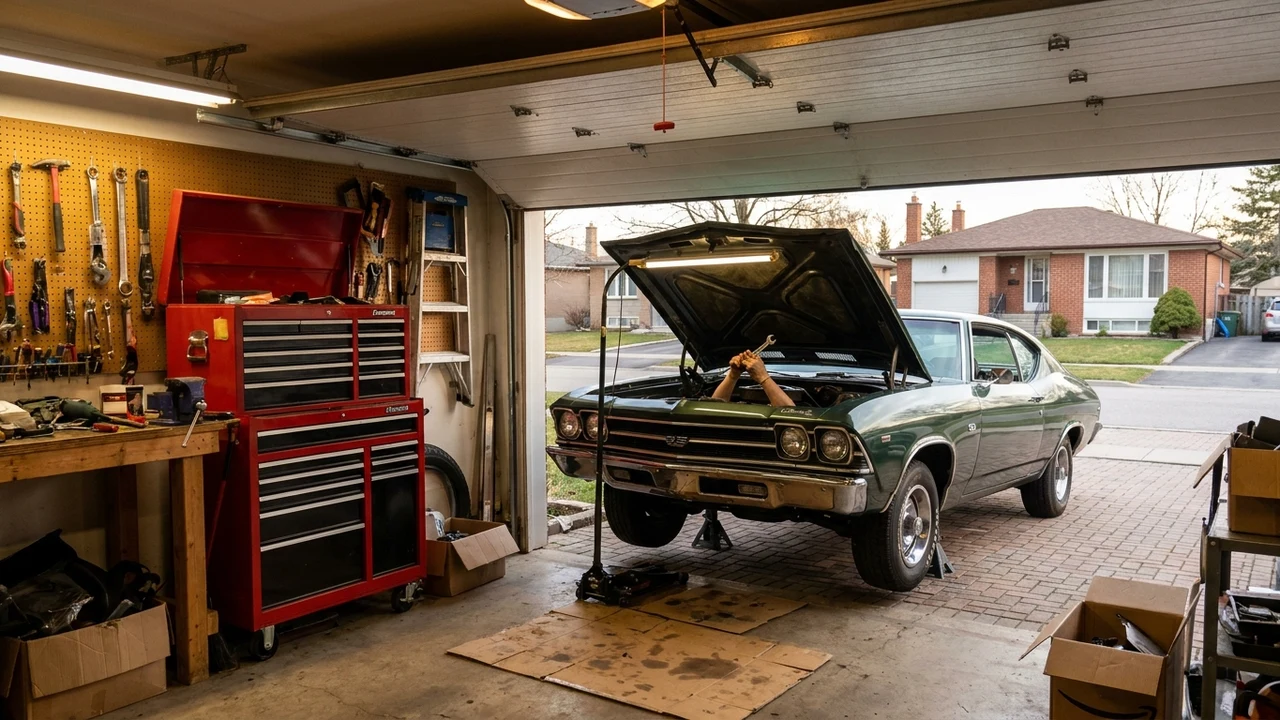
Most garage doors in the GTA cycle two to four times a day: once when someone leaves for work, once when they get home, maybe a midday trip. A garage set up for car projects doesn't follow that pattern. Parts runs, letting exhaust fumes clear, pulling a bike or a second vehicle out to get at the one you're working on, grabbing a tool you forgot — a serious hobby garage can rack up ten or fifteen open-close cycles before most neighbours have used theirs twice. The door itself doesn't know the difference between "commuter household" and "weekend build," but the hardware wears on cycles, not on the calendar, and that's the part most homeowners never think about until something fails at an inconvenient moment — usually with a car sitting under the door or blocking it from being serviced quickly.
Springs and cables run out of cycles, not calendar years
A torsion spring is engineered to handle a set number of open-close cycles before it loses tension and needs replacing. A household using the door four times a day gets years out of that spring without thinking about it. A hobby garage running eight to fifteen cycles a day burns through the same cycle count in a fraction of the time — often well before the door "looks" old. The warning signs are physical, not cosmetic: the door feels noticeably heavier if you lift it by hand, the opener strains or grinds on liftoff, or you can see a visible gap in the spring coil when it's in the relaxed position. A single torsion spring replacement runs $280, a double spring setup (both springs, balanced and checked) is $320–$460, and every spring repair carries Royal's 3-tier warranty. If your door is on a Torquemaster system and you're tired of servicing it, converting to standard torsion is $530. The point isn't to replace springs early out of paranoia — it's to catch fatigue on a scheduled visit instead of a snapped cable while the door is loaded and a car is parked directly under the opening.
Treat opener maintenance as a duty-cycle item, not just a repair call
The opener motor, gear set, and drive mechanism all see the same extra wear the springs do. For a typical household, the $120 maintenance package — lubrication, balance check, sensor alignment, hardware tightening — once a year keeps things running quietly. For a garage in daily heavy use, doing that same $120 tune-up twice a year catches gear wear and loose hardware before they turn into an opener repair, which runs $120–$550 depending on what's actually failed (a stripped gear and a fried logic board are very different repairs, and both fall in that range). If your opener is aging and getting louder or slower to respond, replacing it outright is often the better call for a high-cycle garage: chain drive starts from $600, belt-drive DC from $630, side-mount (Wi-Fi included) from $900, and smart/myQ options from $760 to $1,200, all supplied and installed.
Rollers and track take the brunt of extra cycles
Every cycle also runs the rollers through the track twice — once up, once down. In a hobby garage that's a lot of extra passes, and it shows up first as noise: a grinding or rattling sound as the door travels, or the door sticking and jerking on one side instead of moving smoothly. Left alone, that turns into a track pulled out of alignment or, in the worst case, a door that jumps the track entirely while it's moving. Here's what those symptoms typically mean and what they cost to fix:
| What you notice | Likely cause | Typical cost |
|---|---|---|
| Door feels heavy by hand, opener strains or reverses | Torsion spring fatigued from cycle count | $280 single / $320–$460 double |
| Grinding or rattling in travel, sticking on one side | Worn rollers or a track out of alignment | $120–$220 rollers / $180–$350 track |
| Door reverses or won't close with nothing in the way | Sensors knocked out of alignment by tools, bikes, or a parked car | $120–$180 |
| Door jumps the track or binds partway through a cycle | Off-track condition from worn hardware | $180–$450 |
The service call itself is free with any repair, so a "just make some noise" visit costs nothing extra beyond whatever's actually fixed.
Insulation and weather sealing turn a garage into a real workshop
If you're doing engine work, painting, or anything that takes hours in a GTA winter, an uninsulated door makes the space nearly unusable for half the year. Two things move the needle here. First, weather sealing — bottom seal and side seals, priced $120–$260 depending on door size — stops the draft that comes in along the floor and edges, which is usually the biggest single source of heat loss in an attached garage. Second, if the door panels themselves are old, thin steel with no insulation, a panel replacement ($500–$1,000) or a full door swap brings real R-value into the equation, not just a tighter seal. A tighter, insulated door also cuts down on condensation forming on tool surfaces and body panels overnight, which matters if you're mid-project on a paint job or bare metal work that rust doesn't wait for.
Security for a garage that's worth more than the front door
A garage with a project car, a full tool chest, and a compressor in it is often carrying more resale value than the contents of the house it's attached to, and it doesn't always get treated that way. A smart/myQ opener ($760–$1,200 installed) gives you an activity log and a phone alert every time the door opens or closes, which is the difference between finding out about an unauthorized entry immediately versus finding out when something's already missing. Keeping safety sensors properly aligned ($120–$180 to repair) also matters here — a sensor that's been knocked out of position by a bike leaning against it won't just fail to close properly, it can leave the door sitting open longer than you realize. If you're regularly leaving the garage while mid-project, a smart opener's scheduled auto-close or "did I close it" check from your phone is worth more in a workshop garage than in a typical one.
If you're ready to upgrade: showroom doors and glass options
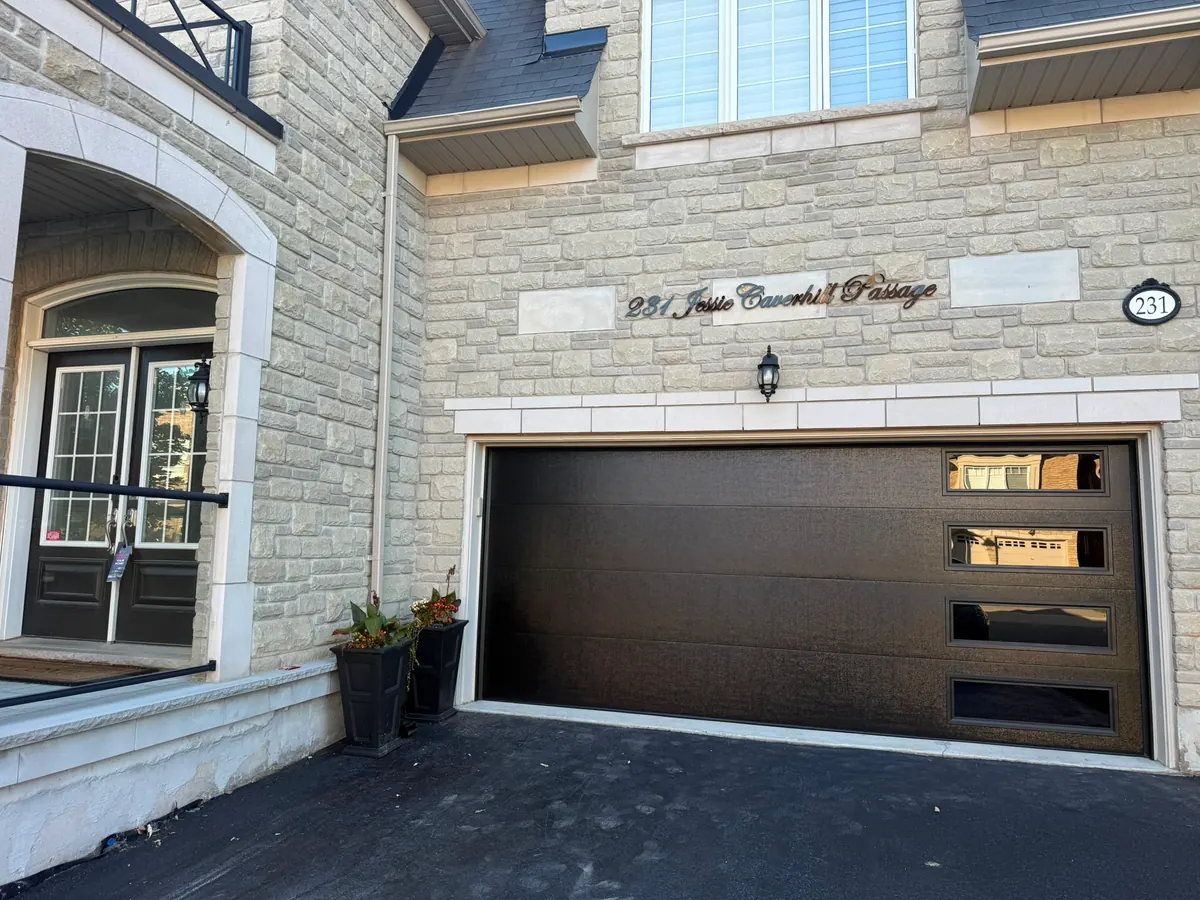
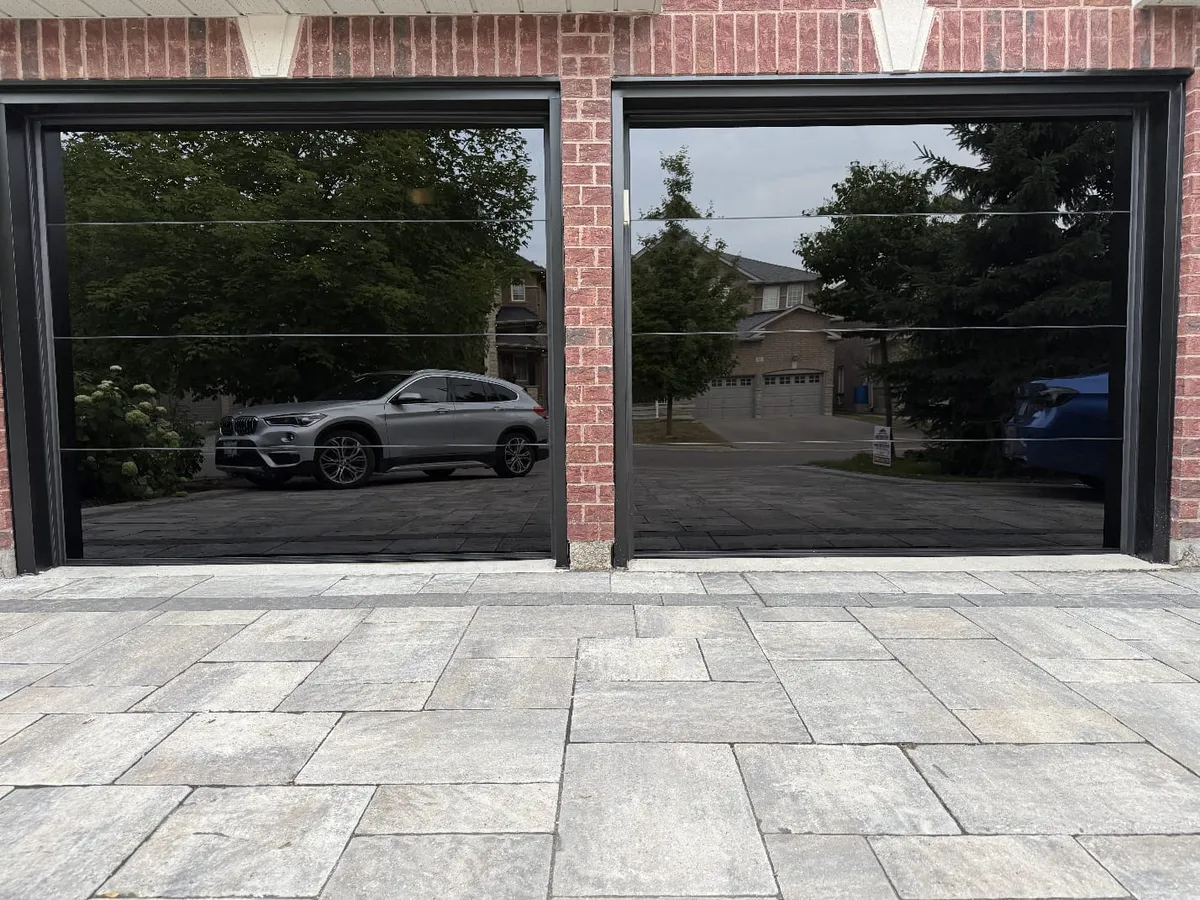
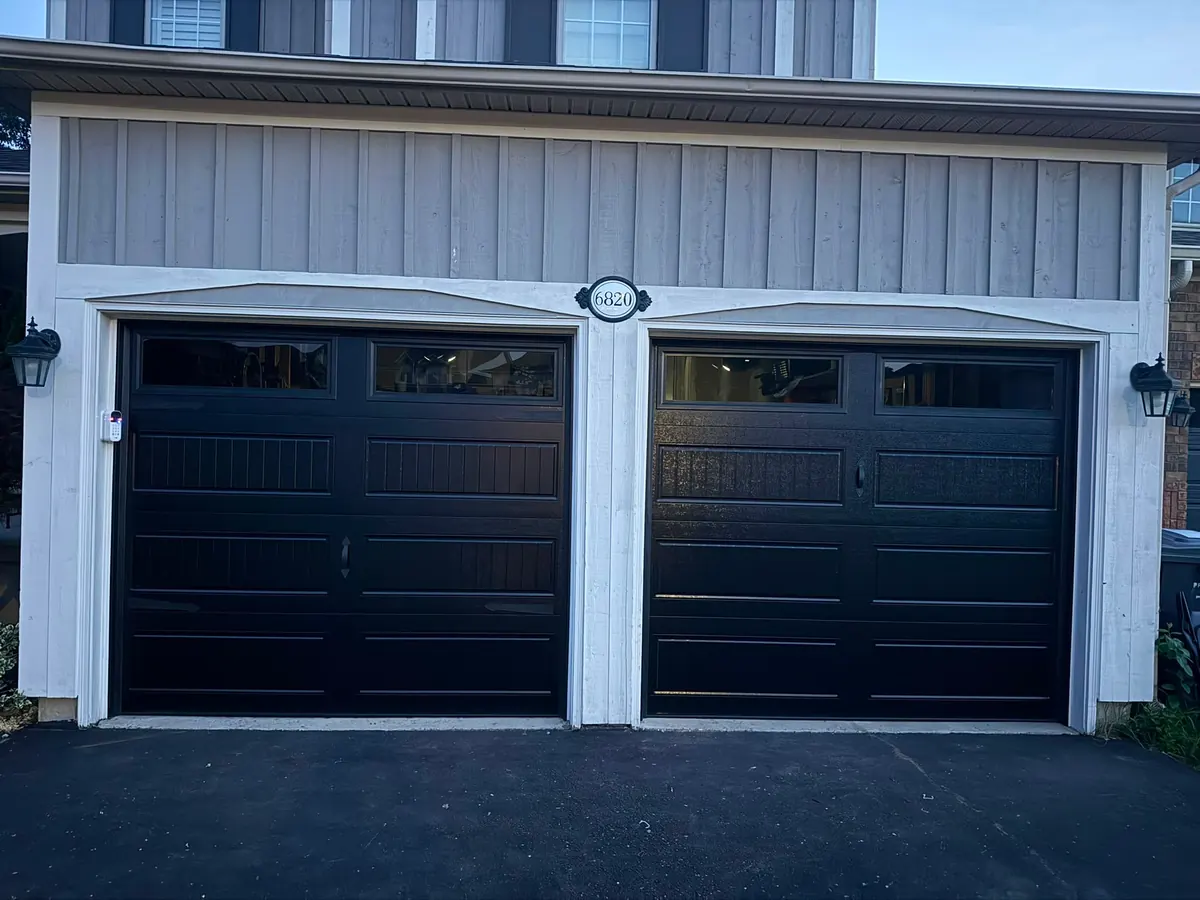
Some enthusiasts want the garage to look the part, not just function. If you've got a car worth showing off, a Full View glass door — framed at $4,000 (8×7) or $6,000 (16×7), or the frameless Infinity version at $4,500 (8×7) or $6,500 (16×7), with tinted glass available for $200 more — turns the garage into a display case without sacrificing security or insulation. If a full glass door is more than you need, window inserts on a standard door run $125 per window and let in real daylight for detail work without the cost of a full glass replacement.
Royal Garage Doors recommendation
If your garage sees daily heavy use for projects, don't wait for a spring to snap or an opener to die mid-cycle — book the $120 maintenance visit twice a year instead of once, and treat any new noise, drag, or hesitation as worth a look right away rather than something to live with. The service call is always free with a repair. See current rates on our full pricing page, or book a visit and we'll assess the door, springs, and opener together so nothing gets missed.
Related reading: Garage Doors for Home-Based Businesses and Contractors.
Frequently Asked Questions
How often should a hobby garage door get maintenance?
Twice a year instead of the usual once, if the door cycles more than five or six times a day. The $120 maintenance package covers lubrication, a balance check, sensor alignment, and hardware tightening, and it catches spring and roller wear before it turns into a breakdown.
Does opening the door more often shorten the spring's life?
Yes. Torsion springs are rated by number of cycles, not years, so a garage cycling ten or more times a day wears through the same spring life much faster than a household doing it two to four times a day. A single spring replacement is $280; a double spring setup is $320–$460.
What's the best opener for a garage used many times a day?
A durable belt-drive DC unit (from $630) or a smart/myQ opener (from $760) both hold up well under frequent cycling and add activity logging, which is useful if the garage holds valuable tools or a project vehicle. Side-mount options from $900 include Wi-Fi and free up ceiling space for a lift or storage.
Can a garage door be insulated for winter car work?
Yes. Weather stripping and a new bottom seal ($120–$260) stop most of the draft along the floor and edges, and swapping worn panels ($500–$1,000) or the full door brings real insulation value instead of just a tighter seal.
Is a smart opener worth it for a garage with tools and a vehicle inside?
For a garage holding more value than a typical two-car garage, yes — a smart/myQ opener ($760–$1,200 installed) logs every open and close and sends a phone alert, so you know immediately if the door opens when it shouldn't, not after something's gone missing.
Sources & standards: Garage door safety follows the UL 325 standard for automatic operators. For safe manual operation, see Chamberlain's emergency-release guidance. Pricing reflects current Royal Garage Doors rates for the GTA.
The bottom line: done right, the result is a garage door that opens quietly, balances correctly and is safe to use every day — backed by Royal's 1-year labour warranty so the outcome lasts.