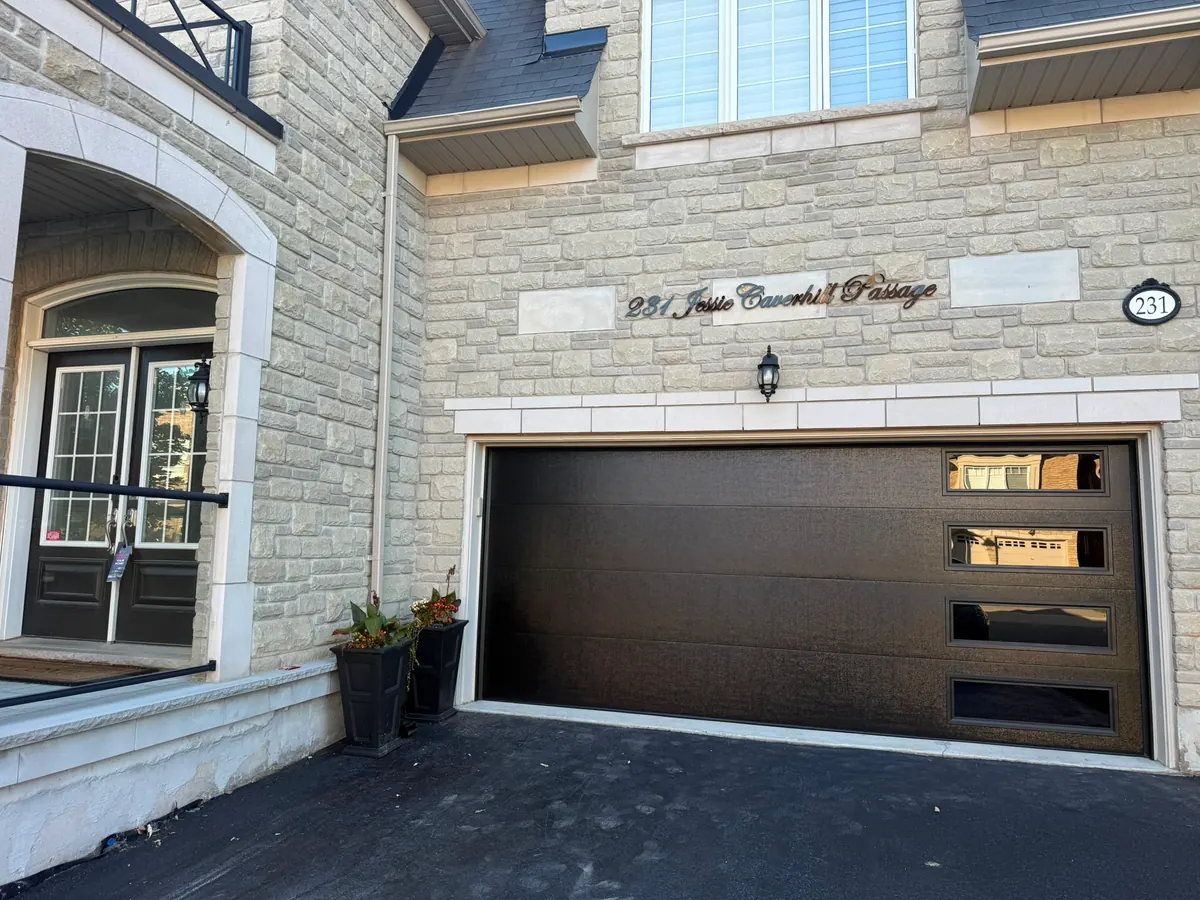
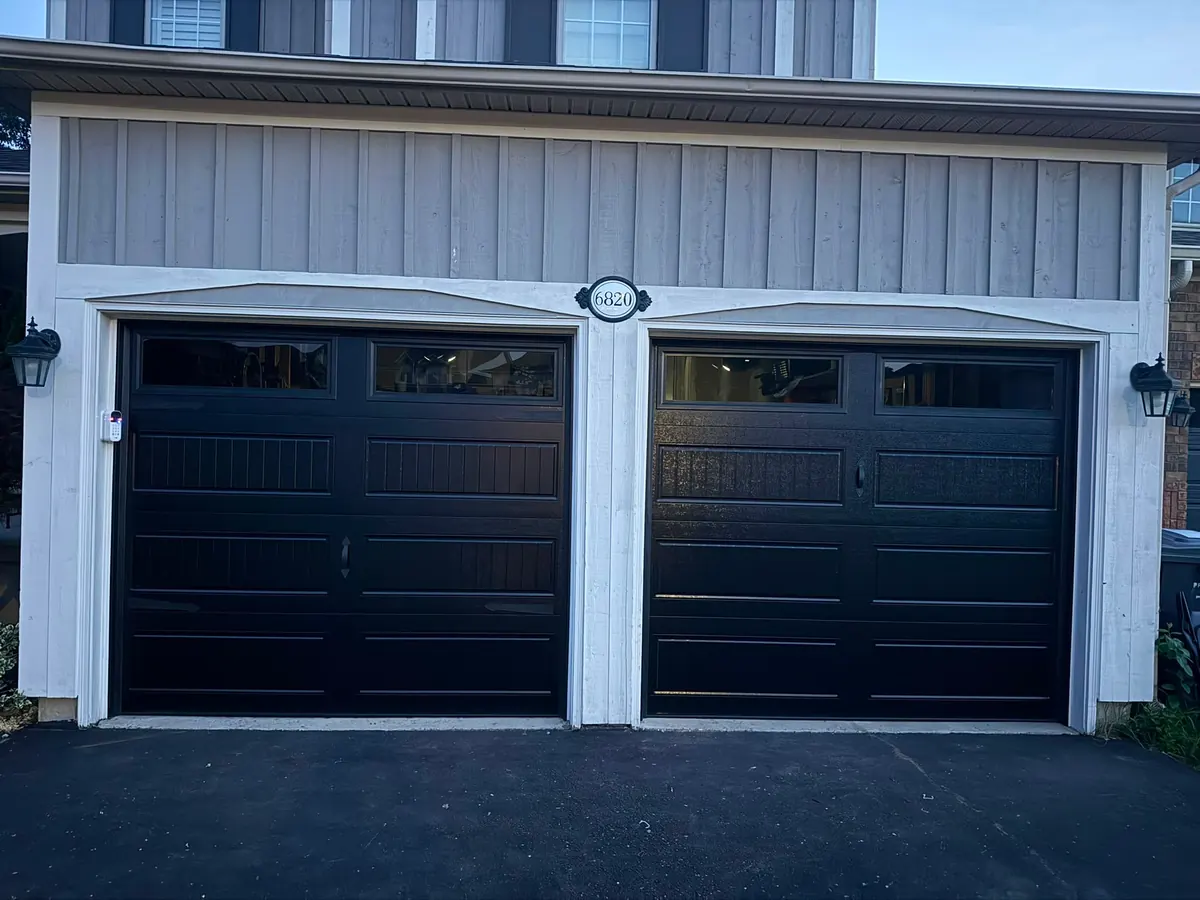
Garage Doors for Home-Based Businesses and Contractors

Royal Garage Doors has customer feedback on its Etobicoke Google profile and technicians with hands-on experience installing and repairing doors across Toronto and the wider GTA.
What garage door setup works best for a home-based business or contractor?
Garage doors for home-based businesses and contractors need to handle far more daily cycles than a typical residential door: often 10 to 20 openings a day instead of 2 to 4. Royal Garage Doors recommends a double spring setup ($320-$460) and a continuous-duty side-mount opener (from $900) for any garage that doubles as a loading dock or workshop.
How many cycles can a garage door spring actually handle before it needs replacing?
A standard torsion spring is engineered around a set number of open-close cycles, and at typical residential use (2-4 cycles a day) that usually lasts several years. A contractor or
- Customer feedback
- Read our Google reviews (Etobicoke profile)
- Experience
- Garage door service across the GTA
- Repair warranty
- 1-year parts and labour unless a specific written warranty overrides it
- Author
- Royal Garage Doors, Garage door repair and installation
Garage doors for home-based businesses and contractors need to handle far more daily cycles than a typical residential door: often 10 to 20 openings a day instead of 2 to 4. Royal Garage Doors recommends a double spring setup ($320–$460) and a continuous-duty side-mount opener (from $900) for any garage that doubles as a loading dock or workshop.
How many times is your door actually opening each day?
A typical GTA homeowner opens the garage door 2 to 4 times a day — once when they leave for work, once when they get home. That's the cycle count every standard residential door and opener is built around.
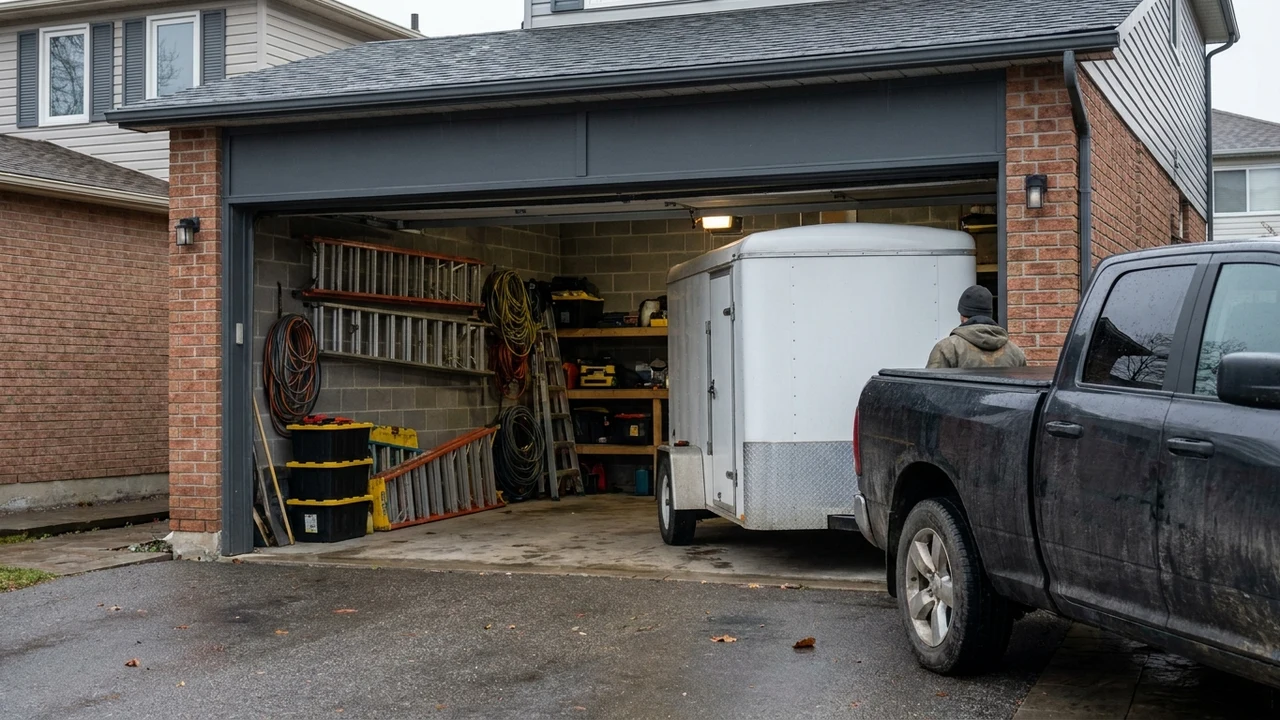
Now compare that to a contractor loading a truck and trailer before every job, a home-based Etsy shop or woodworker with daily supplier drop-offs, or a mobile detailer running two vans out of one garage. That door can easily see 15 to 20 cycles a day, sometimes more during a busy week. Every one of those cycles puts wear on the same handful of parts: the torsion spring, the rollers, the track, the cables, and the opener motor. A door and opener sized for 3 cycles a day simply don't hold up the same way when they're actually doing 15 — and the failure tends to show up at the worst possible time, like 6 a.m. before a job.
Springs wear out faster under daily business use
A single torsion spring ($280) is rated for a set number of open-close cycles, and at typical residential use that's usually good for several years. Cycle it 4-5x more often than a homeowner does, and that same spring reaches the end of its life in a fraction of the time.
For a garage that functions like a loading dock, a double spring setup ($320–$460) is worth the extra cost over a single spring for two reasons: the lifting load is split across two springs instead of one, which slows the wear rate on each, and if one spring does let go, the door doesn't come down completely dead while you're waiting on a same-day repair. Businesses running heavier or commercial-style doors can also spec multiple springs at the commercial per-spring rate ($160/spring) rather than being limited to a standard residential pairing.
Rollers, track, and cables carry more mileage too
- Rollers ($120–$220): nylon rollers run quieter and put less strain on the track than steel, which matters when the door is cycling constantly next to a workspace or living space.
- Track repair/realignment ($180–$350): more cycles means more chances for a bent bracket or a track that's slowly walked out of alignment.
- Off-track repair ($180–$450): a trailer, ladder, or piece of equipment clipping the door is a common way it happens — and GTA winters add snow and ice buildup at the base of the track as a second cause.
- Cables & brackets ($180–$260): fraying shows up sooner under heavy cycling; catching it before a cable snaps is a lot cheaper than the emergency call after.
The opener matters more here than in a typical home
Duty cycle is the real difference between opener types, and it's the spec most homeowners never think about because they never need to. A garage that's also a business entry point should be matched to how hard it actually works, not just to price.
| Opener type | Price (supplied + installed) | Best fit |
|---|---|---|
| Chain drive | From $600 | Lower-cycle doors, detached garages, backup/secondary doors |
| Belt-drive DC | From $630 | Daily heavy use next to a workspace or living space — quieter under frequent cycling |
| Side-mount | From $900 (Wi-Fi included) | High-cycle commercial-style use; frees up ceiling space for storage racks or a lift |
| Smart/myQ | $760–$1,200 | Remote access for deliveries plus an activity log of every open/close |
The side-mount option is worth a closer look specifically for contractors: because the motor sits beside the track instead of hanging from the ceiling, you get the overhead space back for shelving, a ladder rack, or hoisted storage — genuinely useful when the garage is also holding tools and inventory.
Opener repair runs $120–$550 depending on what's failed, from a gear kit to a logic board. On a door that opens 15+ times a day, catching a struggling motor or a worn gear kit at the tune-up stage is what keeps you from finding out it's dead the morning you need to load the truck.
Security is a bigger deal when there's inventory or tools behind the door
A garage that stores power tools, a trailer's worth of equipment, or retail inventory is a different target than one that just holds a car. A few things make a real difference:
- Smart/myQ openers log every open and close with a timestamp, so you know if the door opened at 3 a.m. when it shouldn't have — and you can check it from your phone instead of guessing.
- Working safety sensors ($120–$180 to repair or align) aren't a security feature on their own, but a door that won't close reliably because of a sensor fault often ends up left open longer than it should be. Don't disable a faulty sensor to work around the problem — get it fixed.
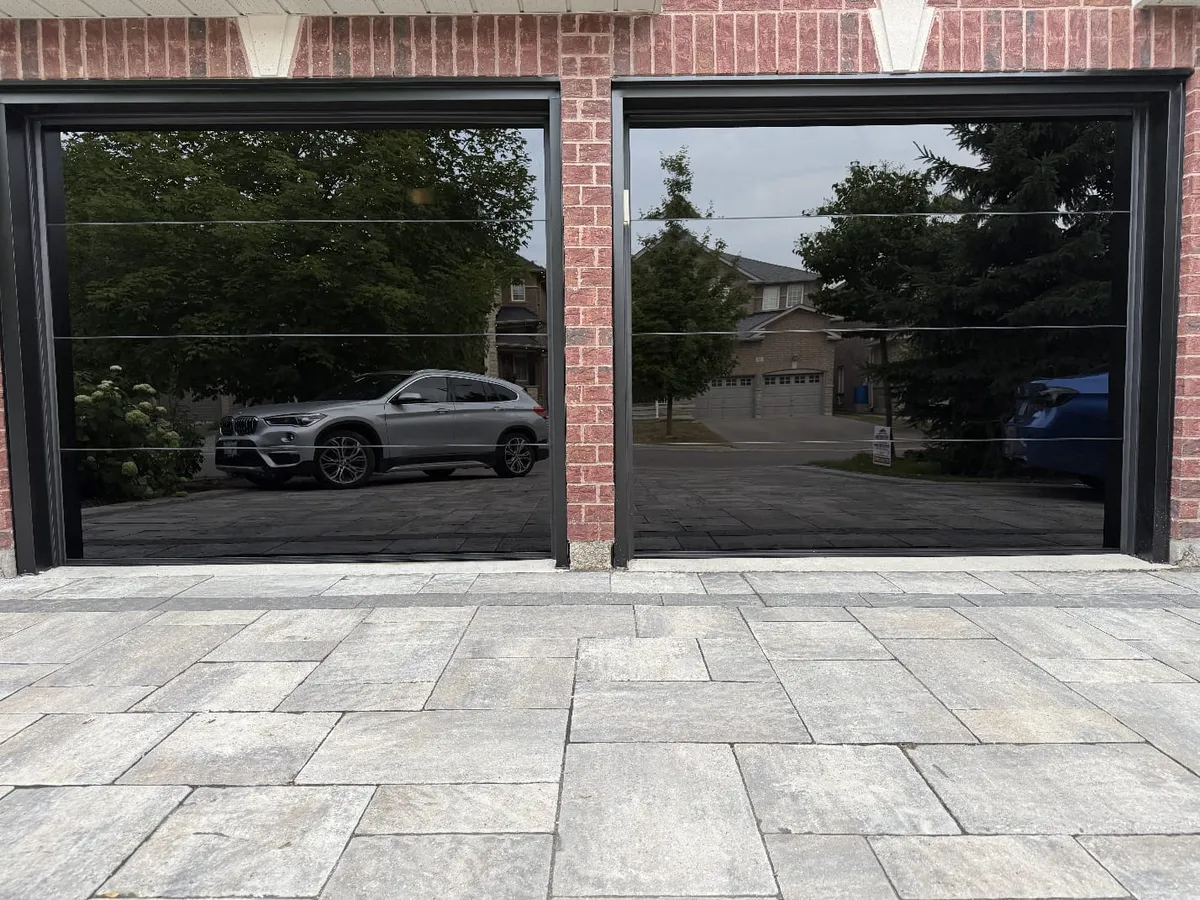
- Solid steel panels without glass sections hold up to prying better than framed or Full Glass doors. If the garage is storing anything worth taking, a standard steel panel door is the more defensible choice over a glass-heavy one, even though Full Glass framed ($4,000 for 8x7) and Infinity frameless ($4,500 for 8x7) look sharp.
Insulation and sealing when the garage doubles as workspace
If you're actually working in the garage — a workbench, a heat gun, inventory that shouldn't freeze — sealing matters as much as security. Weather stripping and a bottom seal ($120–$260) keep GTA winter drafts and meltwater out, which protects both the space and whatever's stored in it. And if a panel takes a hit from equipment being moved in and out and gets dented, that's usually also where the seal starts failing first; panel replacement runs $500–$1,000.
Sizing and finish if you're installing new
If you're setting up a garage specifically to run a business out of, size it for how you actually load and unload, not just for the vehicle:
- 8x7 single: $1,350 installed
- 9x7 single: $1,500 installed
- 10x7 single: $1,650 installed — extra clearance if you're backing in a trailer or a taller van
- 15x7 or 16x7 double: $2,300 installed — two doors, or one wide bay for equipment plus a vehicle
Standard colours — White, Almond, Sandstone, Charcoal, Dark Gray, Brown, Dark Brown, Black — come at no extra charge and, practically speaking, hide daily scuffs and wear better than the woodgrain finish (+$300). Every installed door carries 1-year labour, 5-year hardware, and a lifetime panel warranty against rust-through perforation, which matters more on a door that's earning its keep every day rather than sitting mostly closed.
A maintenance schedule that matches how hard the door works
Twice a year is the right cadence for a typical residential door. A door doing business-level cycles wears its lubrication, balance, and hardware tension down faster, so quarterly checks make more sense. The maintenance package ($120 flat) covers lubrication, a balance check, safety sensor alignment, and hardware tightening — a fraction of the cost of an unplanned repair that stops you from opening for a job.
Royal Garage Doors recommendation
If your garage is doing double duty as a loading dock, workshop, or storage room for a home-based business, don't size it like a typical two-car residential setup. A double spring setup, a continuous-duty opener like a side-mount or a smart/myQ model with activity logging, and a quarterly maintenance schedule are the three changes that make the biggest difference in how long everything lasts. See current rates on our pricing page, or use the price calculator to work out a new install for your setup. The service call is free with any repair — book a visit and we'll assess what your door actually needs based on how you use it.
Related reading: Garage Door Care for Home-Based Auto Enthusiasts and Hobbyists.
Frequently Asked Questions
How many cycles can a garage door spring actually handle before it needs replacing?
A standard torsion spring is engineered around a set number of open-close cycles, and at typical residential use (2-4 cycles a day) that usually lasts several years. A contractor or home-based business cycling the door 15-20 times a day burns through that same spring much faster, which is why a double spring setup ($320-$460) makes more sense than a single spring ($280) for a door working at that pace.
Is a side-mount opener worth the extra cost for a home business garage?
For high-cycle use, yes. A side-mount opener (from $900, Wi-Fi included) is built for more continuous-duty operation than a standard chain or belt unit, and because the motor sits beside the track instead of overhead, it frees up ceiling space for shelving, a ladder rack, or hoisted storage.
Should I get an insulated or sealed door if I run a business out of my garage?
If you're actually working in the space or storing anything sensitive to cold and moisture, weather stripping and a bottom seal ($120-$260) matter a lot more than in a garage that's just parking a car. GTA winters push cold air and meltwater in through a worn seal fast.
How do I keep tools and inventory secure behind a garage door?
A smart/myQ opener ($760-$1,200) logs every open and close so you can spot unusual activity, working safety sensors ($120-$180) prevent the door from being left open due to a fault, and a solid steel panel door without glass sections resists prying better than a framed or Full Glass option.
How often should a high-use garage door be serviced?
Twice a year is fine for a typical residential door, but a door cycling 15+ times a day for business use benefits from quarterly checks. The maintenance package ($120 flat) covers lubrication, a balance check, sensor alignment, and hardware tightening, which is far cheaper than an unplanned failure on a workday.
Sources & standards: Garage door safety follows the UL 325 standard for automatic operators. For safe manual operation, see Chamberlain's emergency-release guidance. Pricing reflects current Royal Garage Doors rates for the GTA.
The bottom line: done right, the result is a garage door that opens quietly, balances correctly and is safe to use every day — backed by Royal's 1-year labour warranty so the outcome lasts.