Garage Doors in Flood-Prone GTA Areas: What to Know

Royal Garage Doors has customer feedback on its Etobicoke Google profile and technicians with hands-on experience installing and repairing doors across Toronto and the wider GTA.
How do you protect a garage door in a flood-prone GTA neighbourhood?
Garage doors in flood-prone GTA areas — near the Etobicoke Creek, Humber River, Mimico Creek, and Cooksville Creek corridors — are most at risk through the opener's low-mounted safety sensors and wiring, not the panel itself. Royal Garage Doors recommends a tighter bottom seal ($120-$260) and a post-storm sensor and wiring check before relying on the door again.
Which GTA neighbourhoods have the highest garage flood risk?
Low-lying areas near the Etobicoke Creek (South Etobicoke, Malton, downtown Brampton), Mimico Creek, the Humber River, Cooksville Creek in Mississauga, the Credit River near Port Credit, and Don River tributaries
- Customer feedback
- Read our Google reviews (Etobicoke profile)
- Experience
- Garage door service across the GTA
- Repair warranty
- 1-year parts and labour unless a specific written warranty overrides it
- Author
- Royal Garage Doors, Garage door repair and installation
Which GTA properties actually carry this risk
Flood risk in the GTA isn't random — it follows the creeks. Low-lying stretches near the Etobicoke Creek (South Etobicoke, Malton, parts of Brampton's downtown core), Mimico Creek, the Humber River, Cooksville Creek in Mississauga, the Credit River near Port Credit, and the Don River tributaries through Vaughan and Richmond Hill all see periodic overland flooding and sewer backup during heavy summer storms. The July 2024 storm that flooded the Don Valley Parkway and stranded GO trains hit several of these same corridors, and homes with garages at or below street grade in those areas took on water through the same gaps a garage door normally keeps weather out of.
A good proxy for your own risk: Toronto, Mississauga, and Brampton all run basement flooding subsidy programs for homeowners on mapped high-risk streets. If your address qualifies for one of those programs, your garage floor is worth the same second look as your basement — especially if the garage sits at or below the driveway grade, which is common on older bungalows and split-levels built before modern grading standards.
The opener is the part that actually fails, not the door itself
A steel or composite garage door panel can sit in a few inches of water and survive it. The opener can't. Most GTA garages mount the motor unit on the ceiling, which is usually safe, but the vulnerable parts sit low:
- The wall control button — often mounted 4-5 feet up, but sometimes lower in older installs, and it's a direct path for water into the low-voltage wiring.
- Safety sensor brackets and wiring — mounted roughly 6 inches off the floor on each side of the track by code, which puts them right in the flood line during even a minor overland event.
- The bottom section of track and any wiring stapled along the wall near floor level.
Water doesn't have to submerge the motor to cause a failure. Sensor wiring that gets wet and corrodes can cause a door to refuse to close, reverse randomly, or ignore the safety beam entirely — all things you want caught in an inspection before you rely on the door again, not discovered when it slams down on something.
Where water actually gets in around a closed door
A closed garage door isn't watertight — it's weather-resistant, and there's a difference. Water gets past a closed door in three places:
| Entry point | Why it fails |
|---|---|
| Bottom seal | Compresses and hardens over a few years; a seal that looked fine in dry weather can leave gaps once it's cracked or UV-brittled |
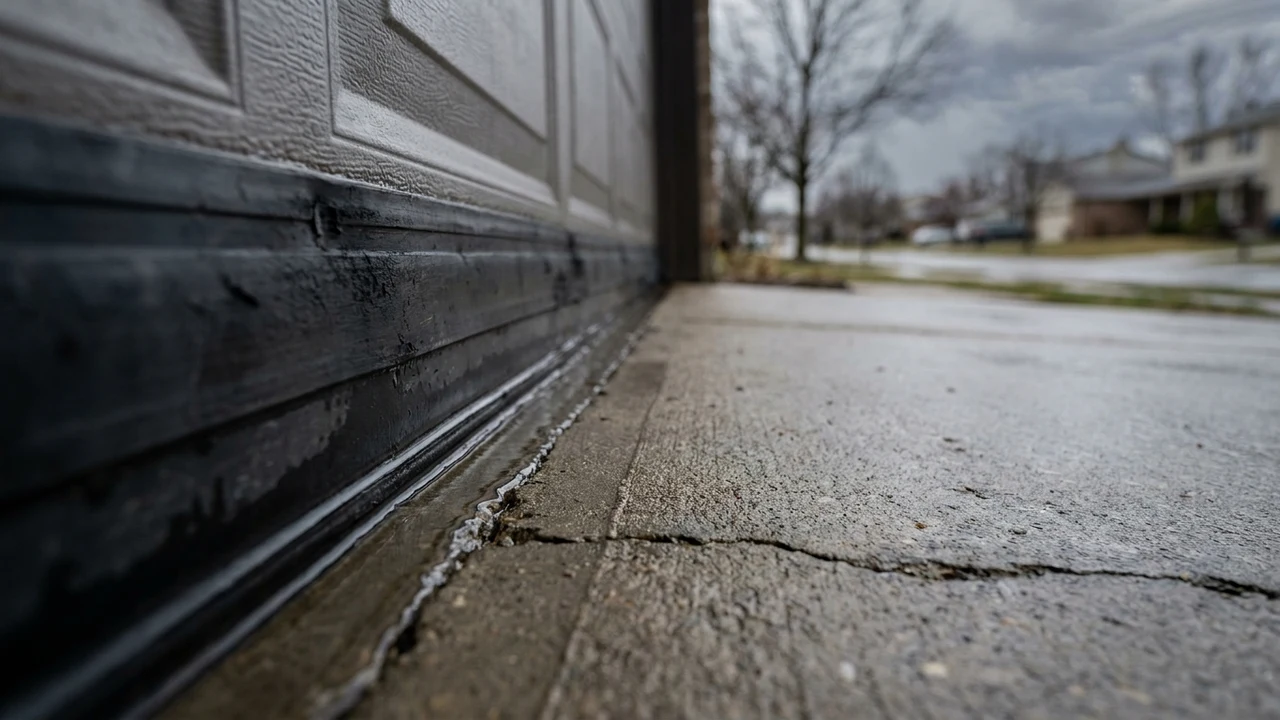
| Uneven driveway apron | Settling concrete creates a low spot right at the threshold, so even a good seal can't make full contact across the width of the door |
| Side and top weatherstripping | Wind-driven rain during a storm pushes water sideways past seals that only resist water coming straight down |
If your driveway slopes toward the garage instead of away from it, no seal fixes that on its own — that's a grading or drainage problem a garage door technician will flag but can't solve with door hardware alone.
Bottom seal and flood-barrier options worth asking about
If you're in one of the higher-risk pockets above, a standard bottom seal replacement is the first upgrade worth making, and it's inexpensive relative to what a flooded opener costs to replace. Bottom seal and side seal work runs $120-$260, depending on door size and how much of the weatherstripping needs replacing. A tighter, correctly-sized seal against a level threshold closes most of the gap that lets shallow overland water in during a heavy storm.
What a seal can't do is stop a genuine flood event — several inches of standing water against the door for an extended period will eventually find its way past any residential door seal, because garage doors aren't designed as flood barriers. For that level of risk, a sump pump and proper exterior grading around the garage apron matter more than anything on the door itself. Ask your technician for an honest read on which category your situation falls into during the service call — it's free with any repair.
If water is rising and the door is still closed
During an active storm, resist the urge to open the door to check on things or move a vehicle:
- Don't run the opener through standing water. If water has reached the bottom track, operating the door pulls water and debris up into the opener's mechanical parts and can short the safety sensor wiring on the spot.
- Cut power to the opener at the outlet if you can safely reach it, rather than leaving it live while water rises nearby.
- Manually release the door only if you must move a vehicle, using the red emergency release cord, and expect to need a full inspection afterward regardless.
The post-flood inspection, step by step
Once water has receded, don't just towel off what you can reach and plug the opener back in. Work through this order:
- Leave the power disconnected until everything below has been checked — a wet opener that gets powered up before it dries can short internally.
- Check both safety sensors. Wipe the lenses, confirm the LEDs come on steady once power is restored, and watch for a blinking light that signals internal corrosion rather than simple misalignment.
- Inspect the springs and cables for rust. Torsion springs are under heavy tension, and surface rust that sets in after a soaking can weaken the coil over time — this is a safety issue, not a cosmetic one, since a spring failure under load can cause serious injury.
- Look at the tracks for silt, debris, or the beginning of rust along the rail, which affects how smoothly the rollers travel.
- Check the opener's logic board and wiring for corrosion or a burnt smell before restoring power — this is the point where a technician's diagnostic is worth more than guesswork.
Springs, cables, and sensor repairs after water exposure follow standard pricing: a single torsion spring runs $280, cables and brackets run $180-$260, and sensor repair or realignment runs $120-$180. Opener repair for a board or wiring issue runs $120-$550 depending on what's actually damaged.
What your door's warranty does and doesn't cover
A newly installed door from Royal carries a 1-year labour warranty, a 5-year hardware warranty, and a lifetime panel warranty against rust-through perforation. That last one matters here — it protects you against the panel itself rusting through over years of normal exposure. It's not a flood insurance policy. Damage from a specific storm or sewer backup event is a homeowner's insurance claim, not a warranty claim, so if your garage took on water, check whether your policy has an overland flood or sewer backup rider before assuming the repair is covered as a manufacturing defect.
Royal Garage Doors recommendation
If your home sits in one of the GTA's known low-lying pockets, don't wait for the next storm to find out how your door and opener handle water. Two things are worth doing proactively: replacing a hardened or gapped bottom seal before the next heavy rain season, and having a technician confirm your safety sensors and opener wiring are mounted and sealed correctly for your specific setup. If you've already had water in the garage, get the sensors, springs, and opener checked before you rely on the door again — a corroded sensor or a weakened spring is the kind of thing that fails without warning. The service call is free with any repair, and every job carries the same 3-tier warranty Royal has backed and Customer feedback on our Etobicoke Google profile. See current rates on our pricing page or book a post-flood inspection directly.
Related reading: Garage Door Checklist After a Big GTA Storm.
Frequently Asked Questions
Which GTA neighbourhoods have the highest garage flood risk?
Low-lying areas near the Etobicoke Creek (South Etobicoke, Malton, downtown Brampton), Mimico Creek, the Humber River, Cooksville Creek in Mississauga, the Credit River near Port Credit, and Don River tributaries through Vaughan and Richmond Hill see the most overland flooding and sewer backup during heavy storms. If your street qualifies for Toronto, Mississauga, or Brampton's basement flooding subsidy programs, your garage is worth checking too.
Can a garage door seal actually stop flood water?
A good bottom seal against a level threshold stops shallow overland water and wind-driven rain, which is most of what a GTA storm produces. It won't hold back a genuine flood with sustained standing water — no residential garage door is built as a flood barrier, so proper grading and a sump pump matter more once water is that deep.
Is it safe to open a garage door if water has reached the bottom track?
No. Running the opener through standing water pulls water and debris into the track and can short the safety sensor wiring immediately. Cut power to the opener at the outlet if you can reach it safely, and only use the manual emergency release cord if you absolutely need to move a vehicle.
What should I check on my garage door after a flood before using it again?
Leave the opener unpowered until you've checked the safety sensors for corrosion, inspected springs and cables for rust (a safety issue since they're under tension), looked at the tracks for silt or debris, and had the opener's wiring and logic board checked for corrosion before restoring power.
Does a garage door warranty cover flood damage?
No. A standard door warranty — 1-year labour, 5-year hardware, lifetime panel warranty against rust-through perforation — covers manufacturing defects and gradual rust, not damage from a specific storm or sewer backup event. That falls under your home insurance's overland flood or sewer backup rider instead.
Sources & standards: Garage door safety follows the UL 325 standard for automatic operators. For safe manual operation, see Chamberlain's emergency-release guidance. Pricing reflects current Royal Garage Doors rates for the GTA.
The bottom line: done right, the result is a garage door that opens quietly, balances correctly and is safe to use every day — backed by Royal's 1-year labour warranty so the outcome lasts.