How to Store Your Garage Door Remote So It Doesn't Get Lost or Stolen

Royal Garage Doors has customer feedback on its Etobicoke Google profile and technicians with hands-on experience installing and repairing doors across Toronto and the wider GTA.
How do you store a garage door remote so it doesn't get lost or stolen?
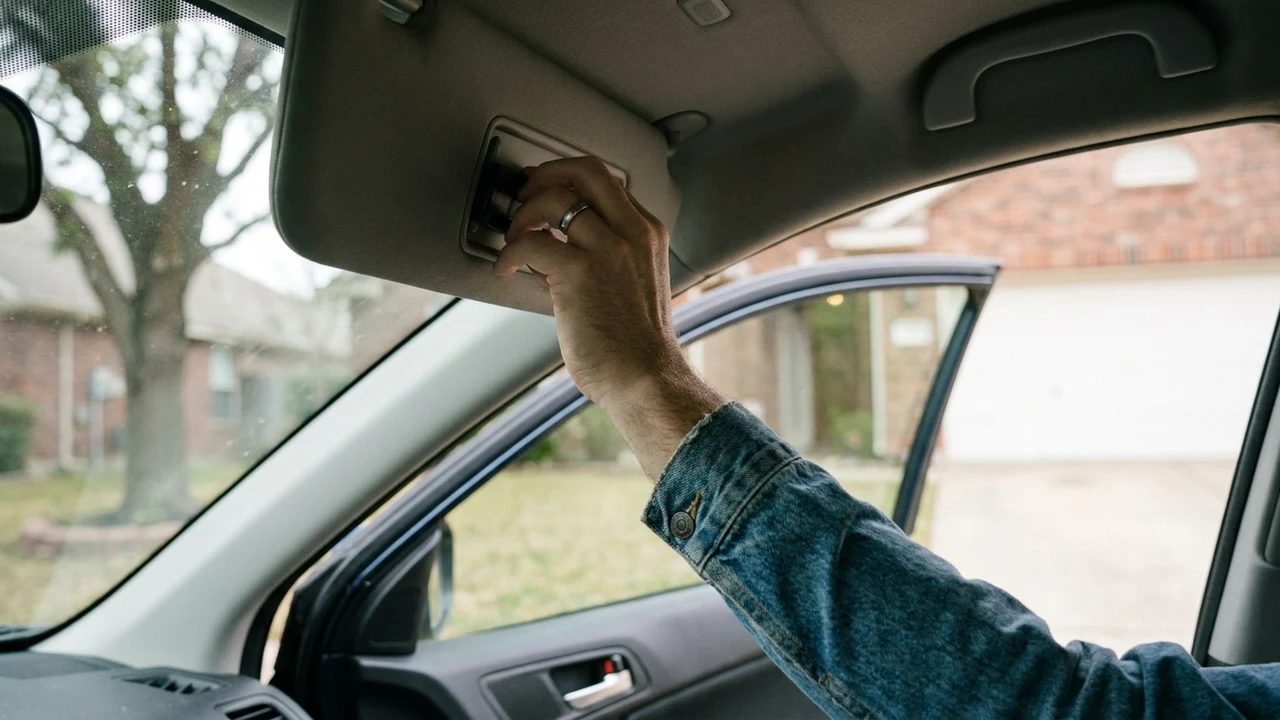
To store a garage door remote safely, never leave it clipped to the visor or sitting in a parked car — a broken window hands a thief a working remote and often your home address from the glovebox.
Can someone open my garage if they steal the remote from my car?
Yes. A remote clipped to the visor or left in the car is already paired to your opener, so it works exactly as it would for you. Rolling code technology
- Customer feedback
- Read our Google reviews (Etobicoke profile)
- Experience
- Garage door service across the GTA
- Repair warranty
- 1-year parts and labour unless a specific written warranty overrides it
- Author
- Royal Garage Doors, Garage door repair and installation
The visor clip is the risk, not the remote itself
Most garage door remotes that get stolen aren't stolen from the garage — they're taken from a parked car. The pattern is familiar to anyone who's dealt with vehicle break-ins around the GTA: a remote clipped to the sun visor is visible through the windshield from the outside, and it tells a thief exactly what they're looking at. Smash one window, and they don't just have a stereo or a bag off the seat — they have a working key to your house that doesn't trigger an alarm, because a garage door opening is a normal, expected event.
It doesn't matter whether the car is parked in your own driveway overnight, at a plaza lot, outside a condo, or in a mall parkade — a visible remote is a visible target. The fix isn't complicated, but it does mean breaking a habit most people never think twice about.
Where to actually keep the remote
The simplest change: don't clip it anywhere a passerby can see it through the glass. A closed glovebox or centre console is far better than a visor — it's not visible from outside, and a smash-and-grab thief working fast usually goes for what's in plain sight, not what's tucked away.
Better still, treat the remote like a house key: take it inside with you instead of leaving it in the car at all. If you're going to be away from the vehicle for more than a quick errand — work, the gym, a long shopping trip — there's no reason it needs to ride along.
The same logic applies to small keychain-style mini remotes. They're easy to leave clipped to a keyring that hangs from the ignition or sits in a cupholder in plain view. Keep them on your house key ring instead, where they travel with you rather than staying in the car.
Cut the physical remote out of the equation where you can
The most durable fix isn't better storage — it's not depending on a lose-able object in the first place. A wireless keypad mounted outside the garage lets you and family members open the door with a code instead of a remote riding around in the car. A smart/myQ-enabled opener goes a step further and lets you open the door from your phone, with no fob to lose at all; Royal Garage Doors installs smart/myQ openers from $760 to $1,200, supplied and installed.
Neither option eliminates every risk — a keypad code can still be watched or shared, and a phone can still be lost — but both remove the specific "smashed car window" pattern that a visor-clipped remote creates.
What rolling code technology does and doesn't protect against
Every opener made in the last few decades uses rolling code technology, which changes the transmitted signal every time you press the button so a thief parked nearby with a signal grabber can't record one press and replay it later. That part of the system works well and isn't something you need to think about day to day.
What rolling code doesn't protect against is the remote itself going missing. A stolen or lost remote is already paired to your opener — when someone presses the button, the opener sees a legitimate, previously-learned code and opens the door exactly as it would for you. The signal doesn't need to be cloned or hacked; the device just needs to be in the wrong hands.
If a remote is lost, or a car with one in it is stolen, erase the code the same day
This is the step people skip, usually because they don't realize how simple it is. Every opener has a Learn or Program button on the motor unit itself — the box mounted on the ceiling of the garage, usually near where the antenna wire hangs down. Press and hold that button (the exact hold time varies by LiftMaster, Chamberlain, Genie, or Craftsman — check the label on the unit or the manual) until the indicator light changes, which clears every remote, keypad code, and vehicle-integrated button paired to that opener at once.
That's the trade-off: it's a full wipe, not a way to erase one remote selectively. Once it's cleared, you reprogram the remotes, keypad, and app you still have — a few minutes per device, following the same Learn-button sequence. If you're not comfortable finding the right button or the light sequence doesn't match your manual, this falls within the same visit as any opener repair; Royal Garage Doors' opener repair calls run $120–$550 depending on what's involved, and the service call itself is free.
Check what else was riding along with the remote
A stolen remote is rarely the only thing in the car worth worrying about. Vehicle registration and insurance papers sit in the glovebox in a lot of cars, and both list the address the car is registered to — pair that with a working garage remote and a thief has directions, not just access. If your registration was in the car, treat your home address as exposed for a while: mention it to whoever's home, and don't leave valuables in obvious view for the next few weeks.
It's also worth checking the door between your garage and the rest of the house. A lot of homes treat that interior door as already-secure because the garage itself is locked, so it never gets a deadbolt or gets left out of the alarm zones. If a remote does go missing, that interior door is the one thing standing between "someone can open my garage" and "someone can walk into my kitchen."
Handing the car off to someone else
The same risk shows up any time the car leaves your hands, not just during a break-in. Pull the remote out of the visor or console before you hand over the keys:
- Valet parking — a stranger has full access to the car's interior for the length of the visit.
- A mechanic's shop or dealership service bay — the car can sit unattended for hours or overnight.
- A test drive or trade-in — the remote can end up staying in a vehicle you no longer own.
- Rideshare or a car left running — anyone who gets in has whatever's visible for as long as they're inside.
It takes ten seconds and it's the one habit that actually closes this gap for good.
Royal Garage Doors recommendation
Don't wait to find out the hard way that a remote left in a parked car was paired and working the whole time. If yours is lost, or a car it was riding in has gone missing, get the codes erased and the remaining remotes reprogrammed the same day rather than leaving the opener exposed. If you'd rather stop carrying a remote at all, ask about switching to a keypad or a smart/myQ opener next time you're due for service. Book a visit — the service call is free with any repair, and reprogramming or an opener swap falls within our published pricing.
Related reading: Garage Door Keypad Not Accepting the Code.
Frequently Asked Questions
Can someone open my garage if they steal the remote from my car?
Yes. A remote clipped to the visor or left in the car is already paired to your opener, so it works exactly as it would for you. Rolling code technology doesn't stop a physically stolen device from working — it only stops the signal from being cloned remotely.
How do I erase a lost or stolen remote from my garage door opener?
Find the Learn or Program button on the opener's motor unit, usually near the antenna wire, and press and hold it until the indicator light changes. This clears every remote, keypad code, and vehicle button paired to that opener at once, and you reprogram the devices you still have afterward. If you're not sure which button or sequence applies to your model, this is covered under a standard opener repair visit ($120–$550), with a free service call.
Is it risky to keep my vehicle registration in the glovebox with the remote?
Yes. Registration and insurance papers list your home address, so if both are in a stolen or broken-into car, a thief has a working garage remote and directions to your house in the same place. Store them separately, or at minimum don't leave the remote clipped where it's visible alongside them.
What's a safer alternative to a visor-clip remote?
A wireless keypad mounted outside the garage, or a smart/myQ opener, lets you open the door with a code or your phone instead of a remote that can be left in the car. Royal Garage Doors installs smart/myQ openers from $760 to $1,200, supplied and installed.
Does rolling code technology stop a stolen remote from working?
No. Rolling code prevents someone from recording your signal with a nearby scanner and replaying it, but it doesn't affect a remote that's been physically taken. That remote is already paired and will keep opening the door until you erase the opener's codes.
Sources & standards: Garage door safety follows the UL 325 standard for automatic operators. For safe manual operation, see Chamberlain's emergency-release guidance. Pricing reflects current Royal Garage Doors rates for the GTA.
The bottom line: done right, the result is a garage door that opens quietly, balances correctly and is safe to use every day — backed by Royal's 1-year labour warranty so the outcome lasts.